Lakeside Elite Concrete logo
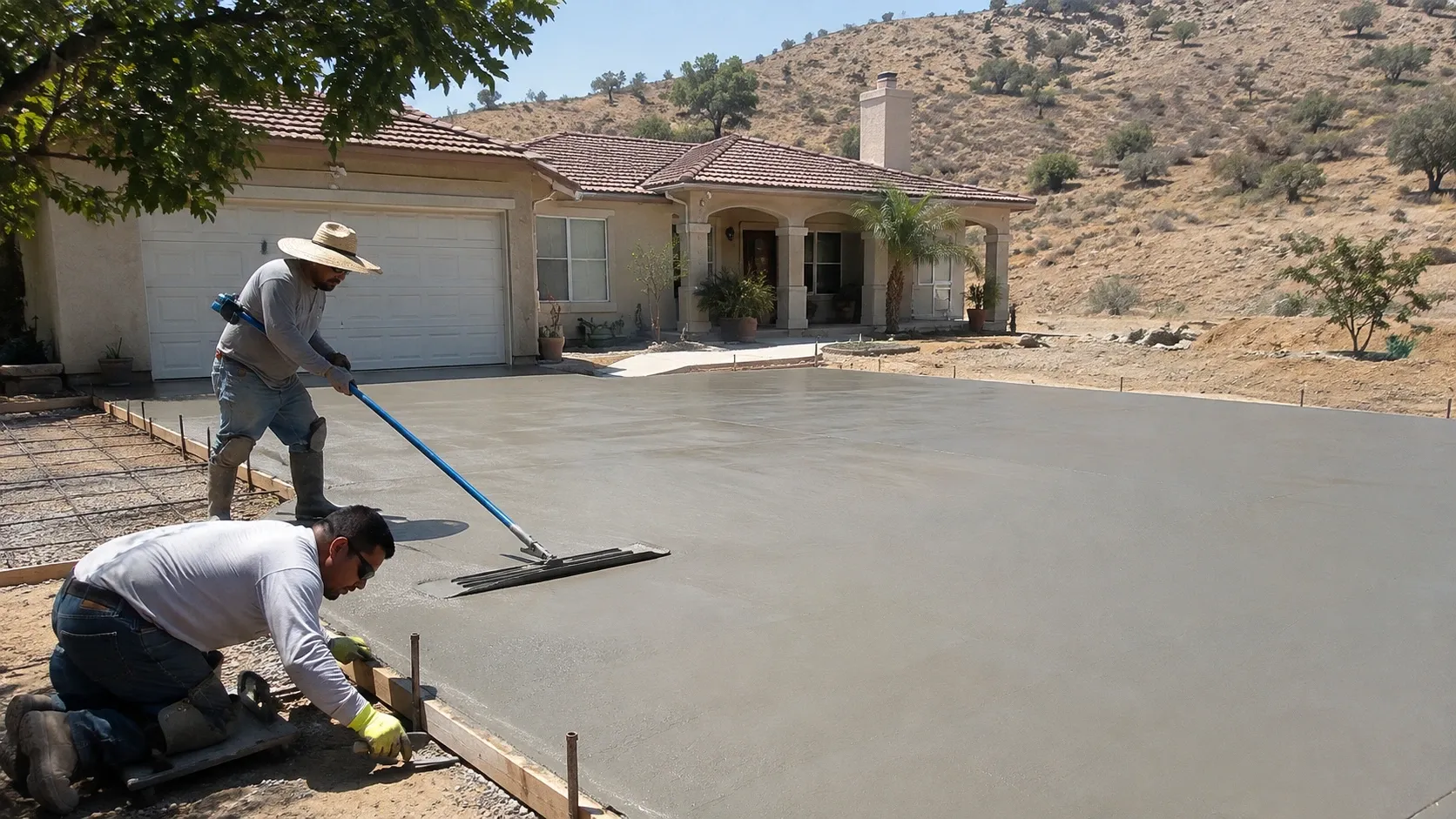
Two concrete finishers working a freshly poured driveway in front of a stucco ranch home, one pulling a bull float across the wet slab and one edging the form on a knee board, with dry hills behind.

Lakeside Elite Concrete: Driveways, Patios, Sidewalks and Stamped Concrete for Residential & Commercial Properties

Lakeside Elite Concrete handles concrete installation, repair, resurfacing and decorative concrete for homeowners and businesses across Lakeside, California. Our crew of 6 in-house finishers has worked Lakeside's larger lots for 15 years and completed more than 750 concrete projects across Lakeside and East San Diego County. We pour everything from RV pads and flat work to horse barn slabs, wash racks and foundation work for the sheds and outbuildings common on bigger rural properties here.

Every pour gets reinforced with the right rebar or wire mesh for the job it's doing. We also compact the base underneath properly before any concrete goes down, since a strong pour starts with what's beneath it. You'll be happy with how the finished surface turns out, whether you want a stamped pattern, an acid-stained look, or a plain resurface of what's already there. We hold a C-8 concrete contractor classification, pull any required permits ourselves, and carry full insurance, with every estimate delivered in writing and no hidden line items. Give us a call today for a free estimate.

Get Your Free Concrete Estimate

Recent Concrete Projects in Lakeside, CA

Before
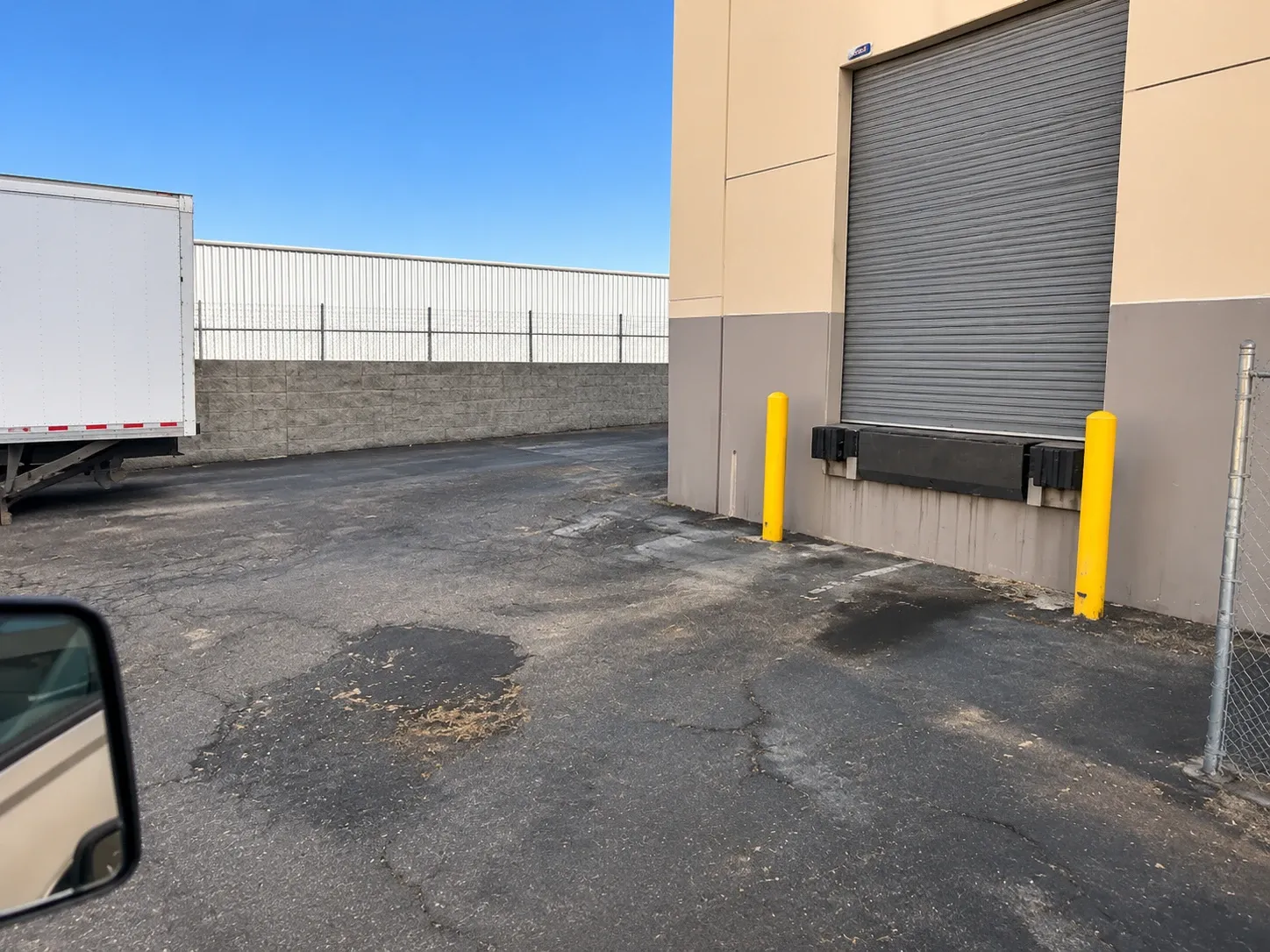
Before: broken, patched asphalt with oil stains in front of a warehouse loading dock door with yellow bollards, a box trailer parked at the left.
After
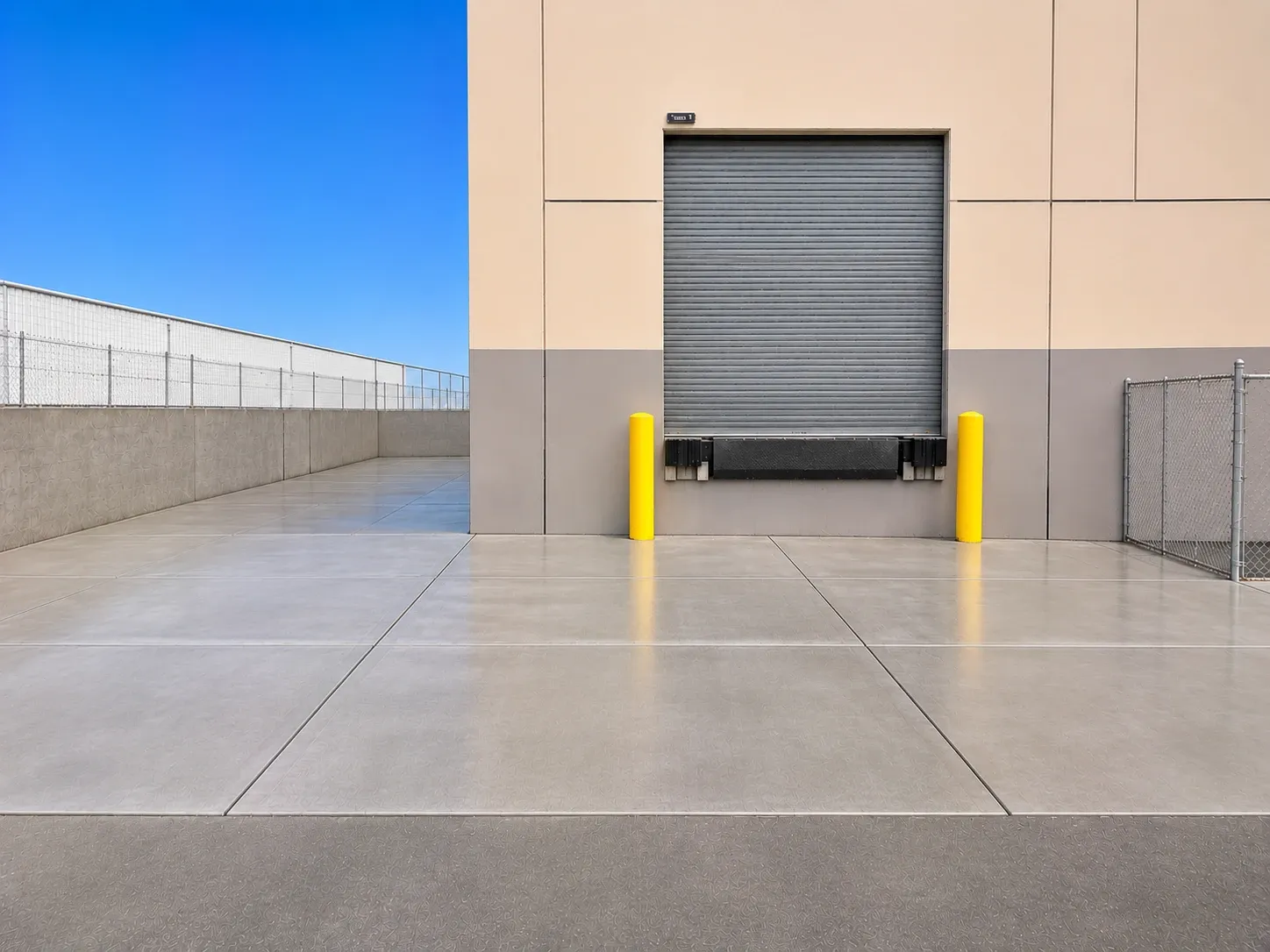
After: a new broom-finished concrete approach slab with saw-cut joints in front of the same warehouse loading dock door and yellow bollards.

Commercial, Santee

Warehouse Loading Dock & Parking Lot

CommercialSanteeTotal project value: $145,000

The challenge

The property manager needed the lot back in operation fast and was worried a full closure would cost them tenants' trust.

What we did

  • We phased the pour across sections rather than closing the whole yard at once, and reinforced the loading dock approach slab heavier than the rest of the lot, since that section takes the hardest repeated impact from trailers backing in.

The result

The manager told us afterward that the phased approach was the reason they didn't lose a single day of operations, and the lot has held up without a complaint since.
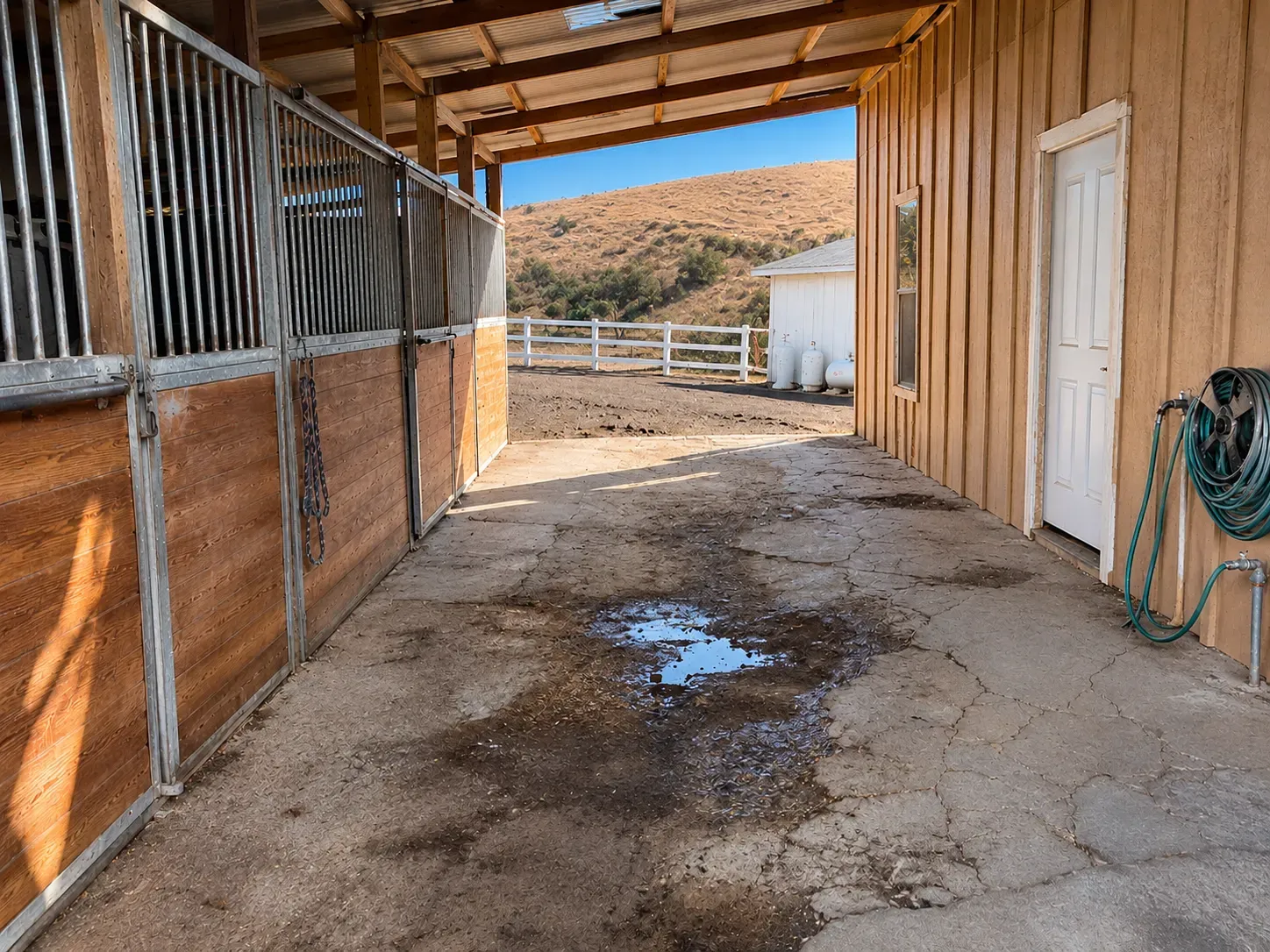
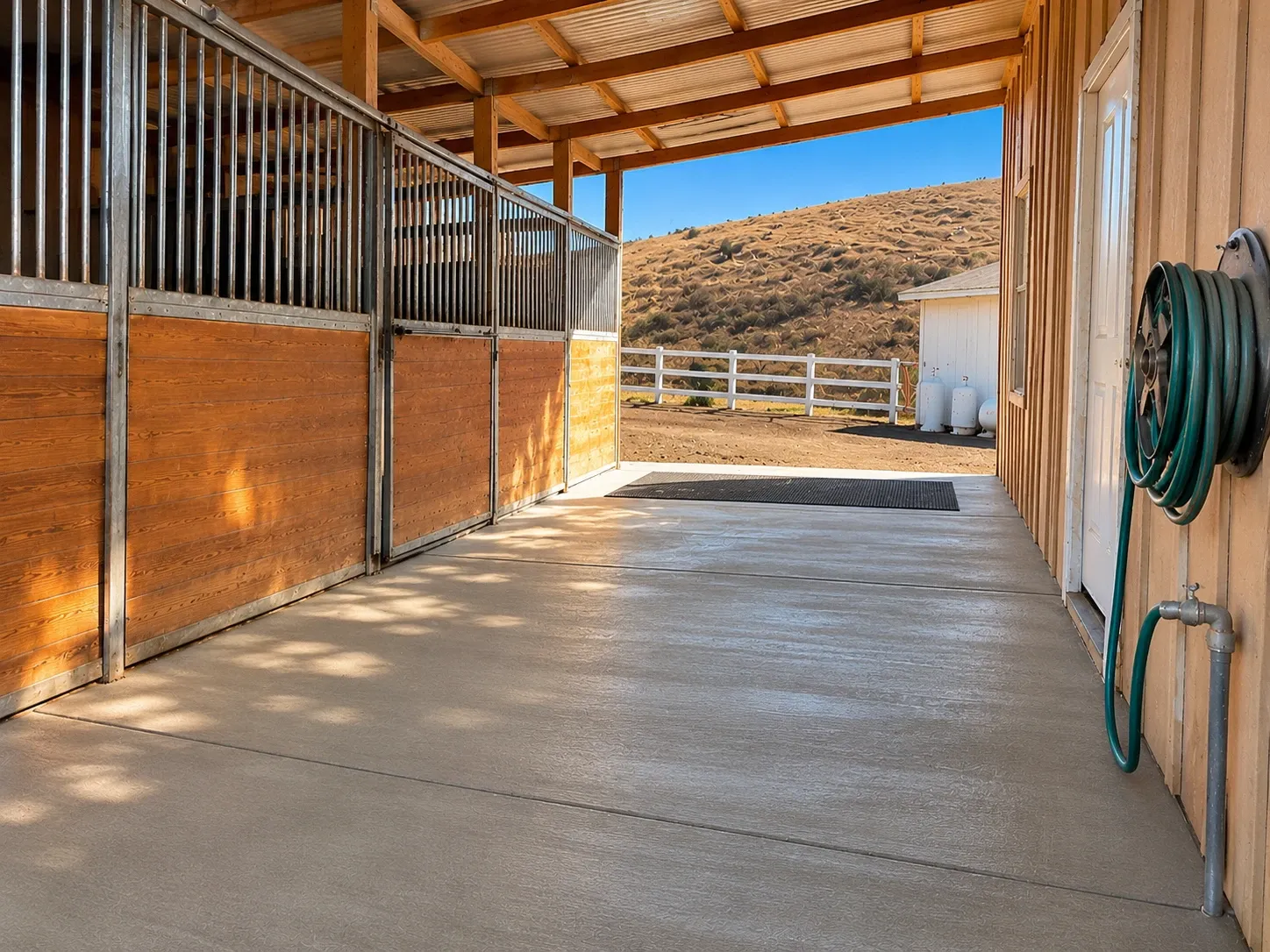
Before
Before: cracked, stained concrete barn aisle with standing water beside the horse stalls
After
After: new broom-finished concrete barn aisle with saw-cut joints beside the horse stalls

Residential, Eucalyptus Hills (Lakeside)

Horse Barn Slab & Wash Rack

ResidentialEucalyptus Hills (Lakeside)Total project value: $38,500

The challenge

The homeowner had dealt with a wash rack that never drained right at their old property and was anxious about getting the slope correct this time.

What we did

  • We built in a specific fall rate so water and waste drain away properly, and finished the barn floor with a broom texture for traction around the horses.
  • They also asked for a separate equipment pad poured at the same time, which saved a second mobilization trip.

The result

They've told us since that the wash rack finally works the way it was supposed to, and that peace of mind alone was worth it.

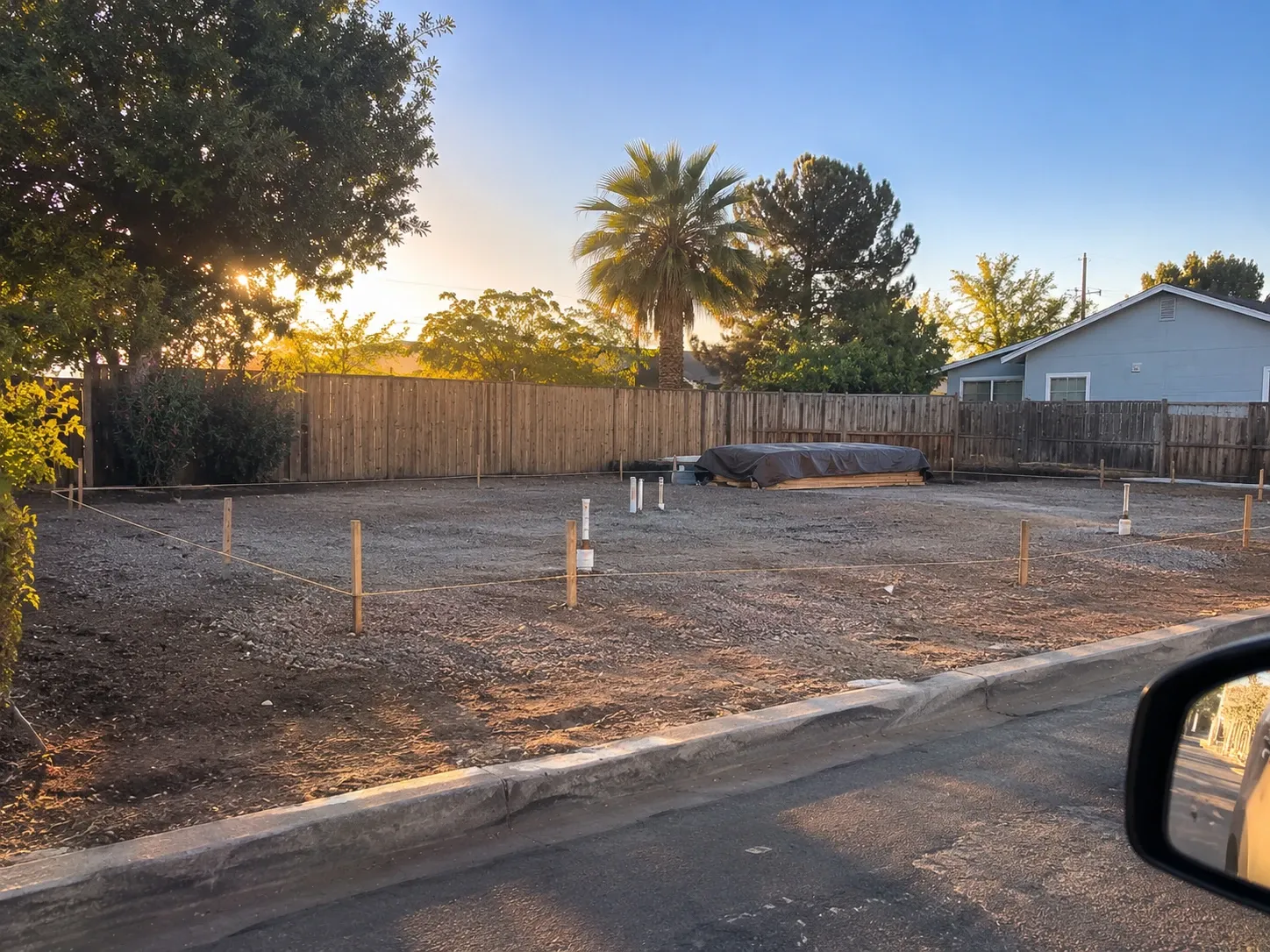
Before
Before: graded gravel building pad staked out with string lines and plumbing stubs
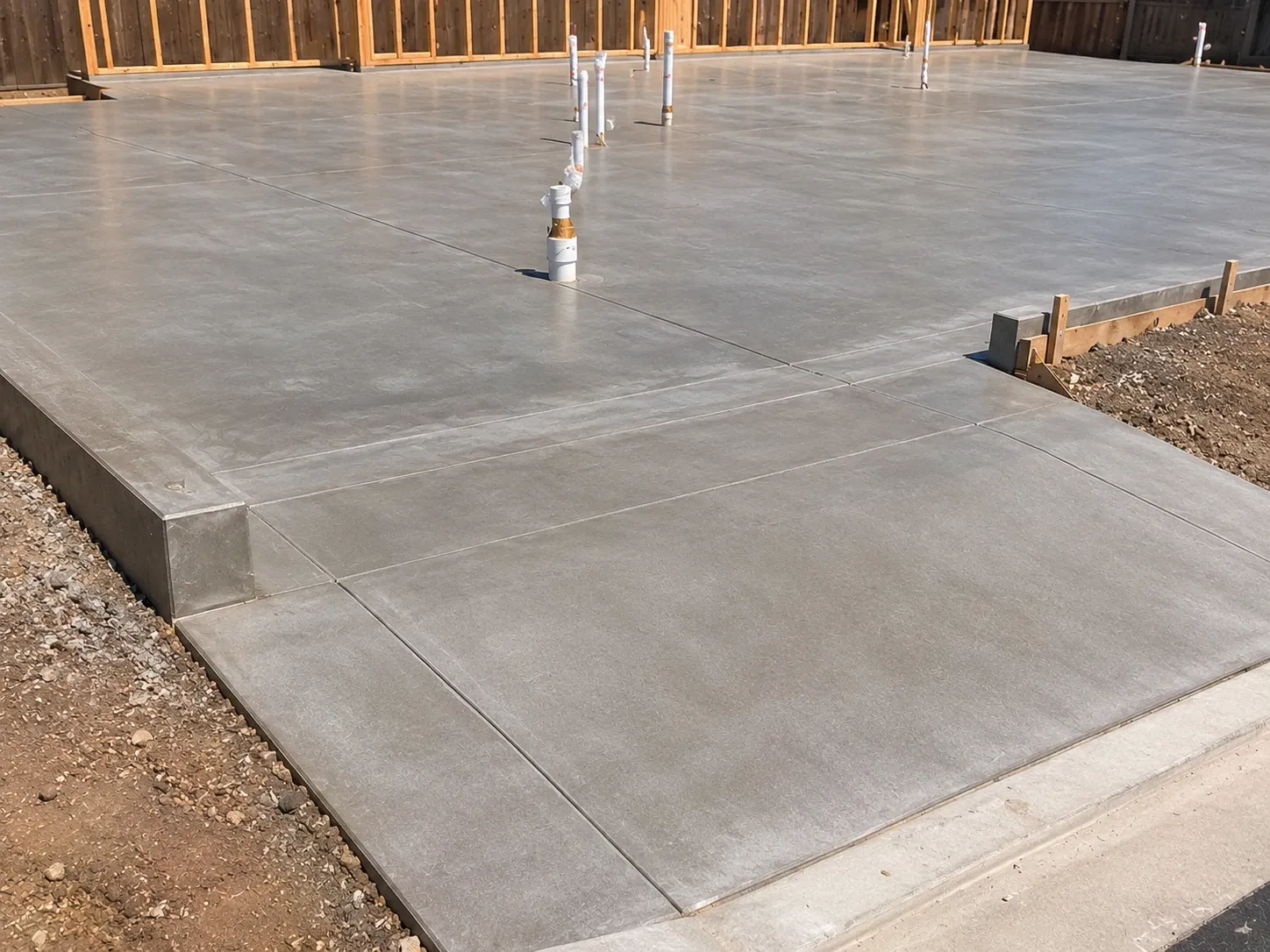
After
After: finished concrete foundation slab with saw-cut joints and plumbing stubs

New Construction, El Cajon

Home Foundation & Driveway Apron

New ConstructionEl CajonTotal project value: $52,000

The challenge

The general contractor was under pressure to keep the broader build on schedule, and any delay on the foundation would have pushed back every trade behind it.

What we did

  • We coordinated foundation elevation with the framing crew's schedule so the next trade could start without waiting on cure time, and poured the apron in the same mobilization as the foundation.

The result

The contractor came back to us for the next phase of the project specifically because we hit the date we committed to.

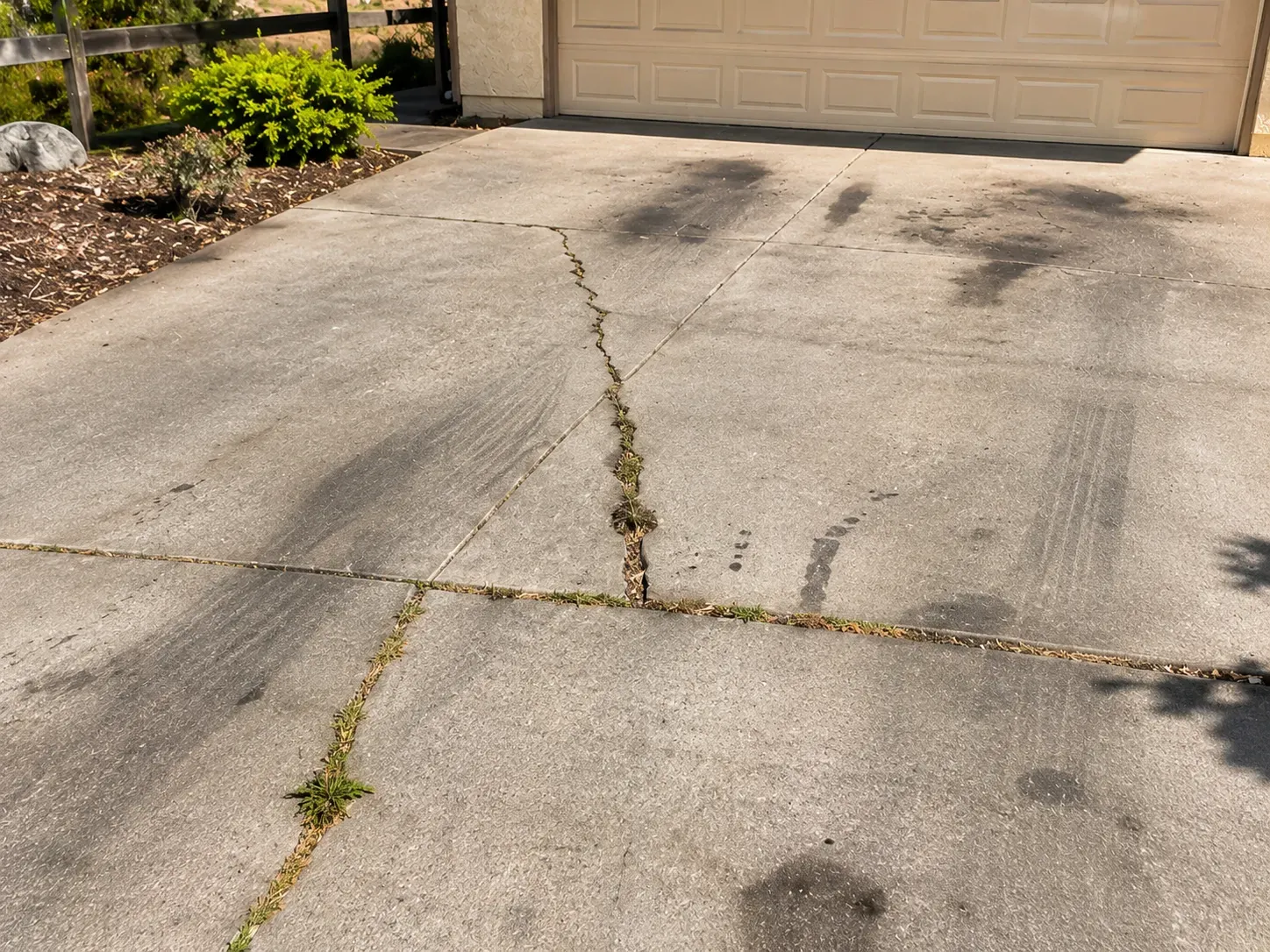
Before
Before: cracked, oil-stained concrete driveway with weeds growing in the cracks
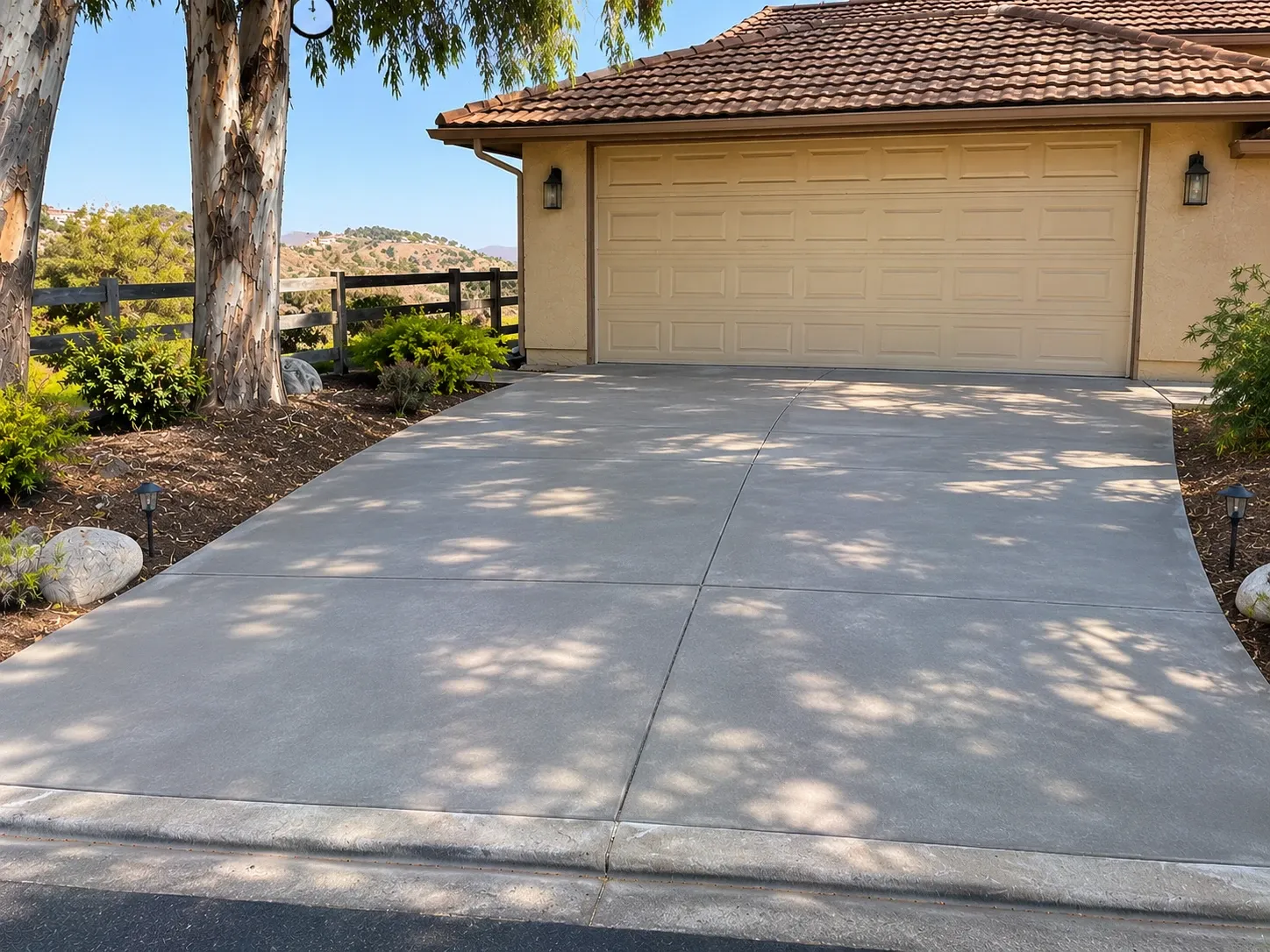
After
After: repaired and resurfaced concrete driveway with clean joints in front of the garage

Repair, Winter Gardens (Lakeside)

Driveway Crack Repair & Resurfacing

RepairWinter Gardens (Lakeside)Total project value: $9,800

The challenge

The homeowner had already been told by another estimate that the whole driveway needed to come out, and they were bracing for a much bigger bill than they could easily absorb.

What we did

  • The base underneath was still solid once we actually checked it, which meant they avoided the cost of a full tear-out entirely.
  • We resurfaced the whole driveway rather than just patching the cracked section, so the finished surface reads as one even slab.

The result

They told us they were relieved it came in at a fraction of what they'd braced for.

Before
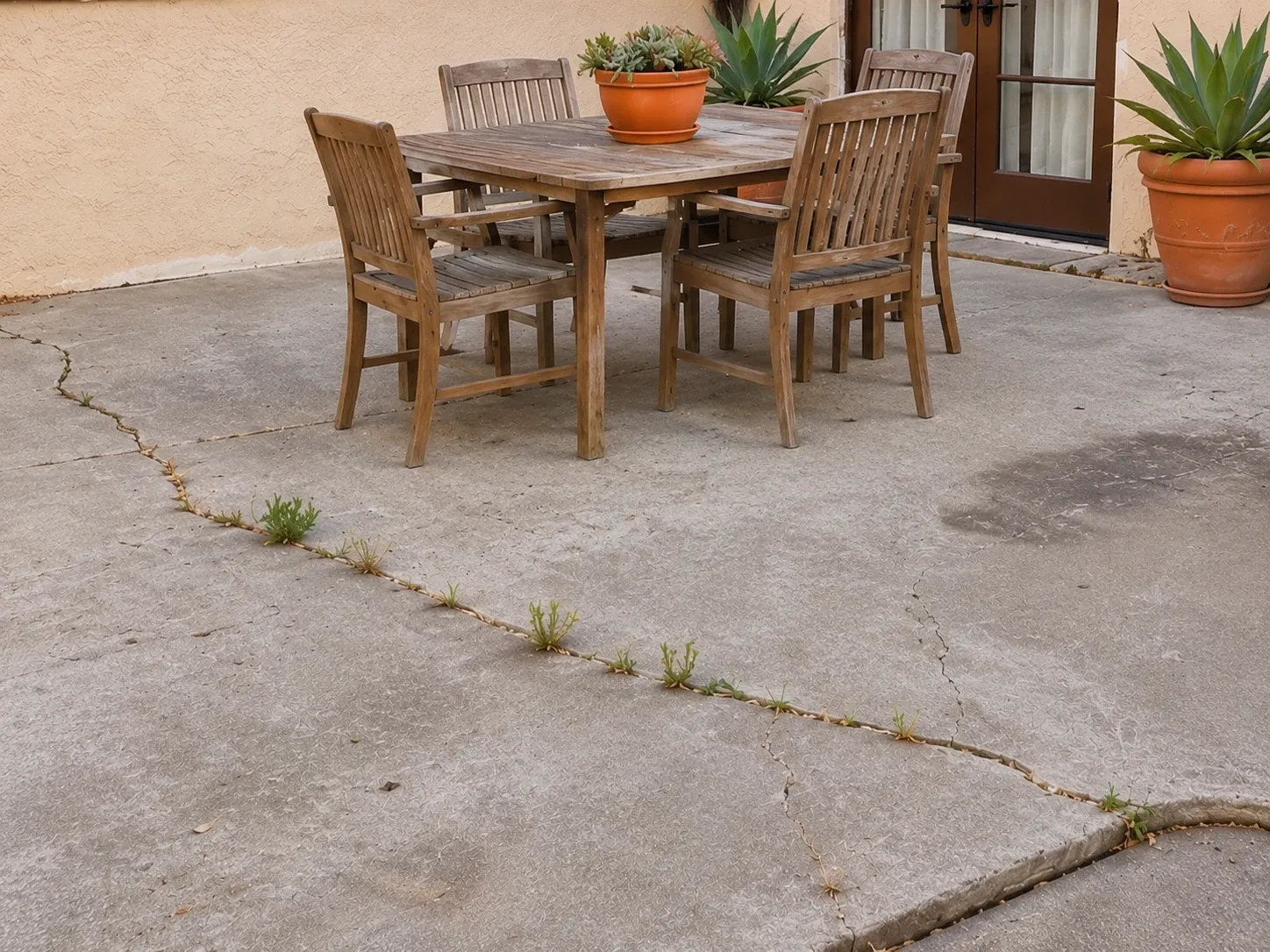
Before: old cracked concrete patio with weeds in the cracks beside a wooden table and chairs
After
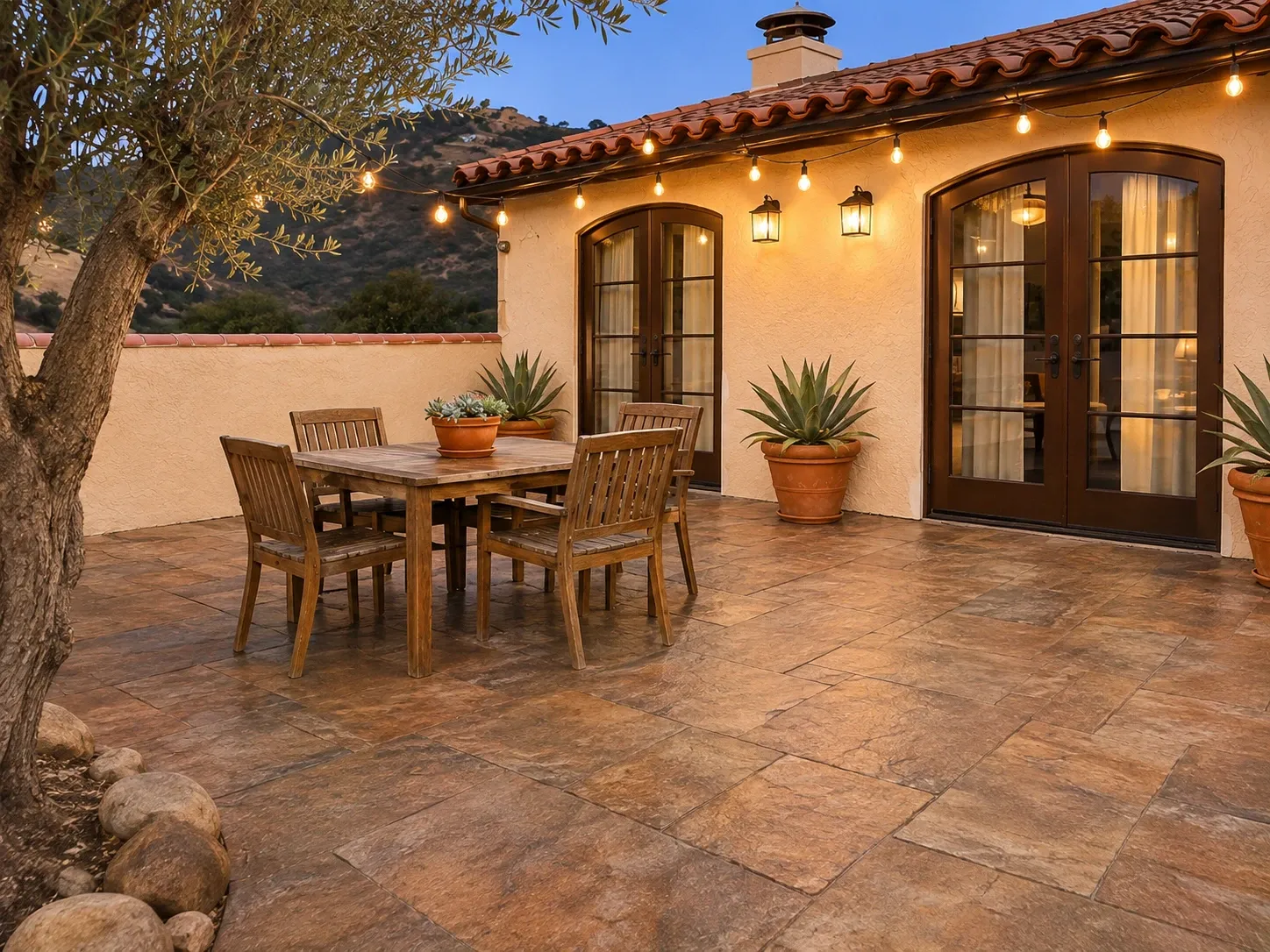
After: new slate-pattern stamped concrete patio outside a Spanish-style home at dusk

Remodel, Ramona

Stamped Concrete Patio Replacement

RemodelRamonaTotal project value: $18,200

The challenge

The homeowners had lived with a cracked, dated patio for years and were nervous about matching a new stamped pattern to a home with a lot of existing character.

What we did

  • We matched the new stamped pattern to the home's existing roof tile color so the finished patio reads as part of the original build, not an addition.
  • The old patio's base had failed, so this needed a full removal and new pour rather than a resurface.

The result

They said the finished result finally made the backyard feel like it belonged to the rest of the house.

Before
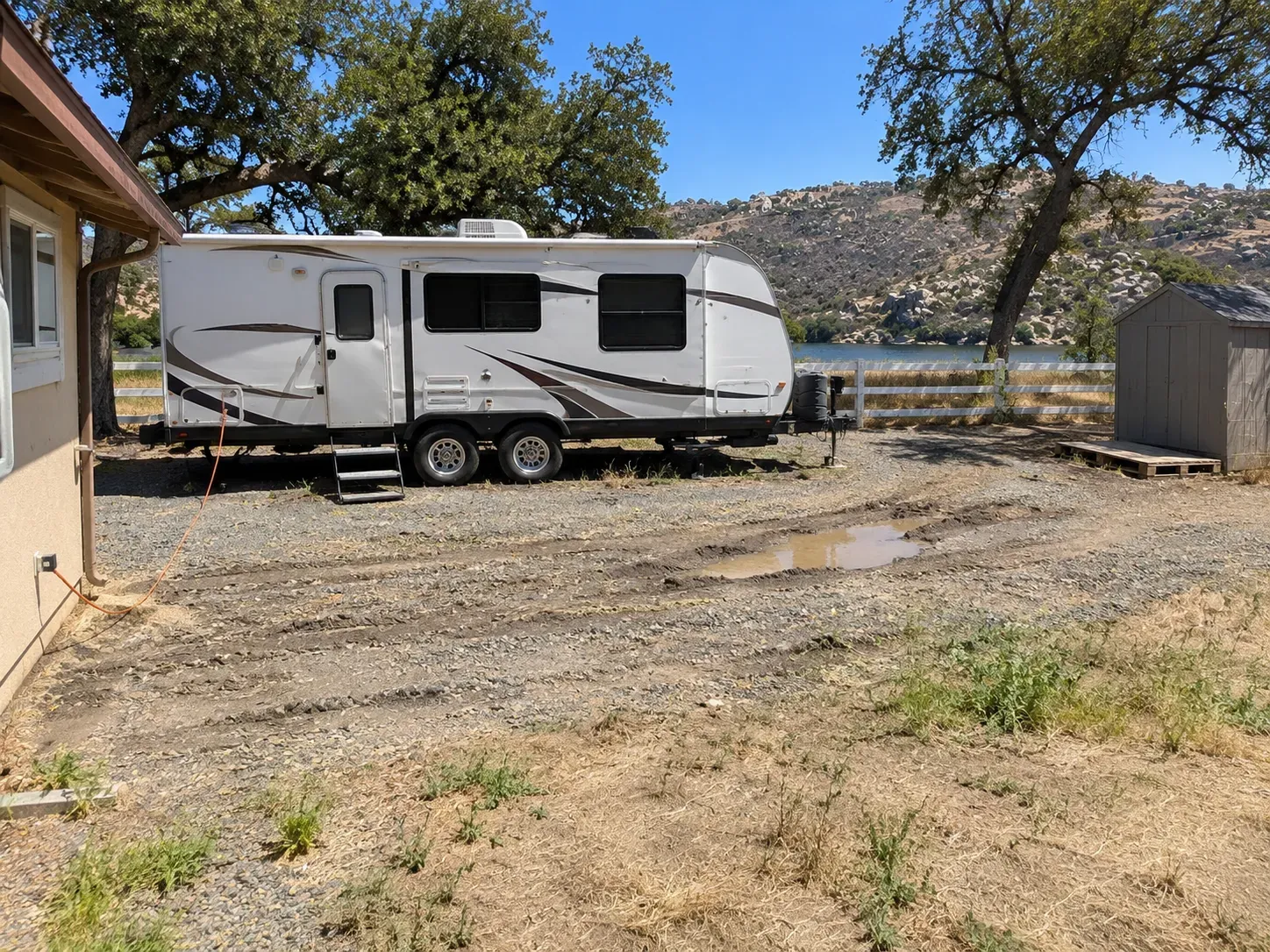
Before: travel trailer parked on rutted, muddy gravel beside the house
After
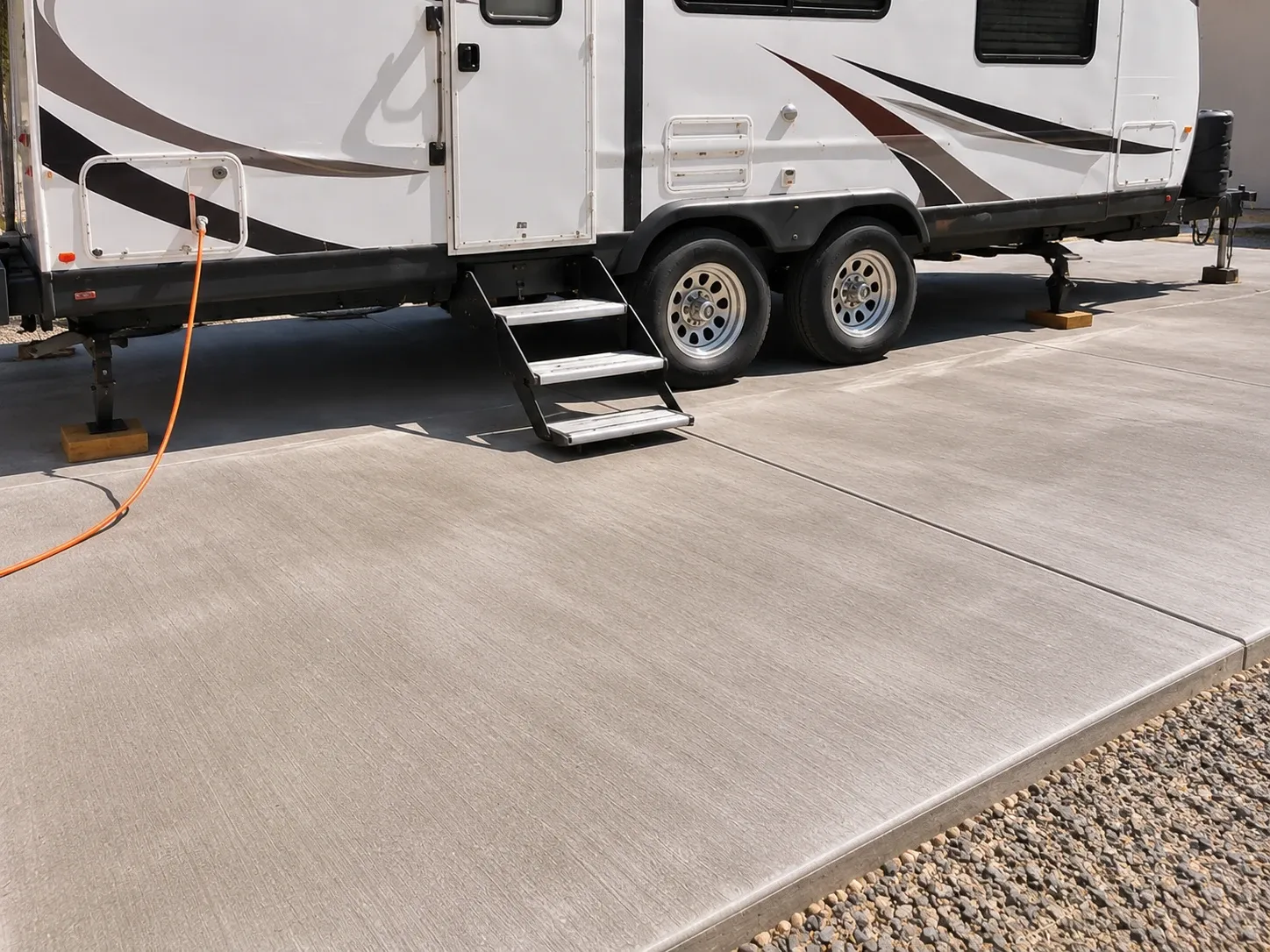
After: travel trailer parked on a new broom-finished concrete RV pad

Residential, Lake Jennings Area (Lakeside)

RV Pad & Utility Slab

ResidentialLake Jennings Area (Lakeside)Total project value: $14,500

The challenge

The homeowner had been parking their RV on a stretch of gravel for years and wanted something that would actually hold up long-term instead of turning into its own maintenance project.

What we did

  • We graded the pad with drainage running away from the RV's hookup side, a detail that gets missed on pads poured as an afterthought, and sized a separate utility slab to support a small shed at the same thickness for a consistent finished look.

The result

They told us afterward it was the first thing on the property that actually felt finished instead of makeshift.

Residential Concrete Services in Lakeside, CA

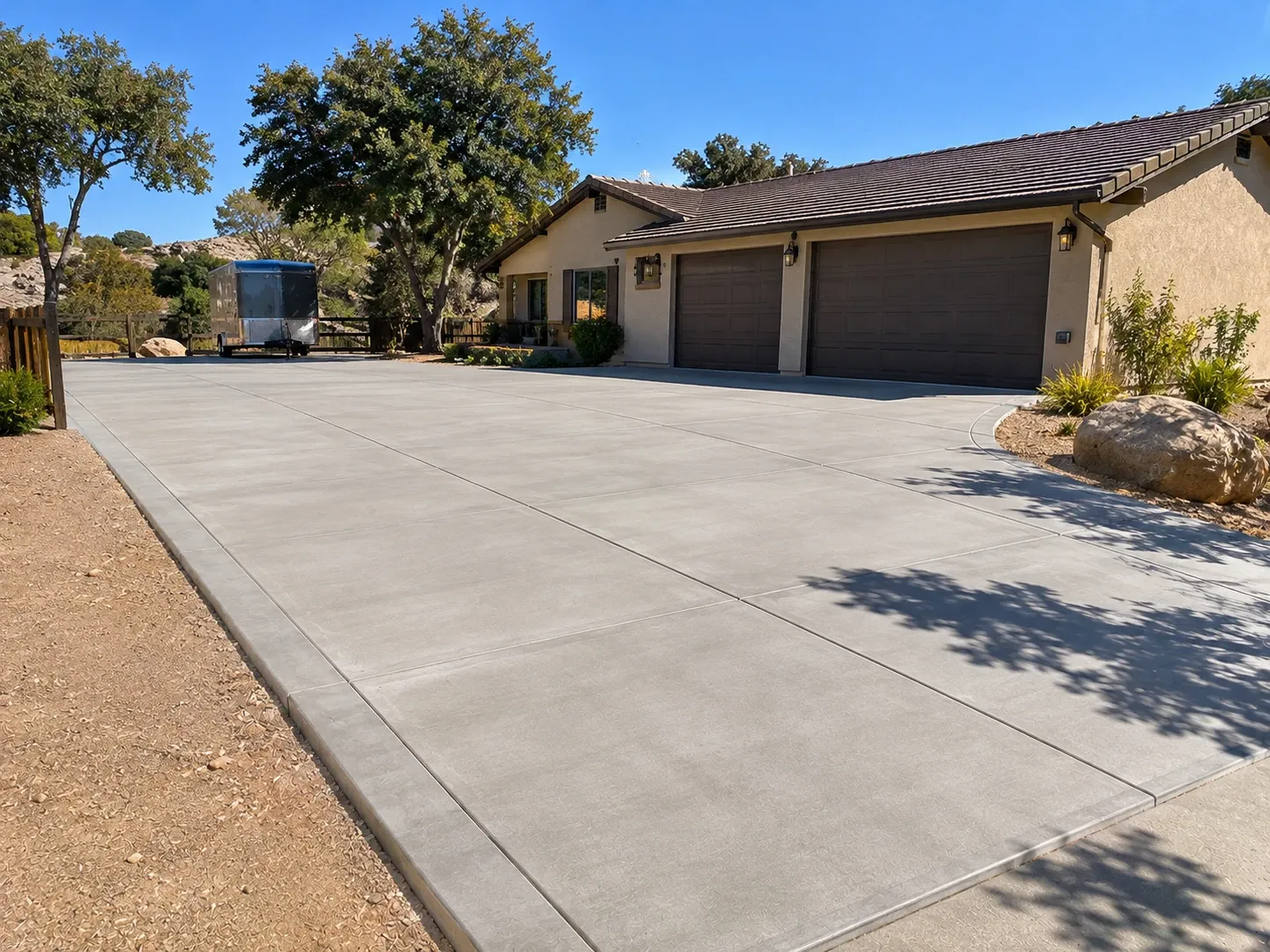
A wide new broom-finished concrete driveway with saw-cut joints and a smooth border band, leading to a ranch home's three-car garage, with a trailer parked on the side area.

Concrete Driveways

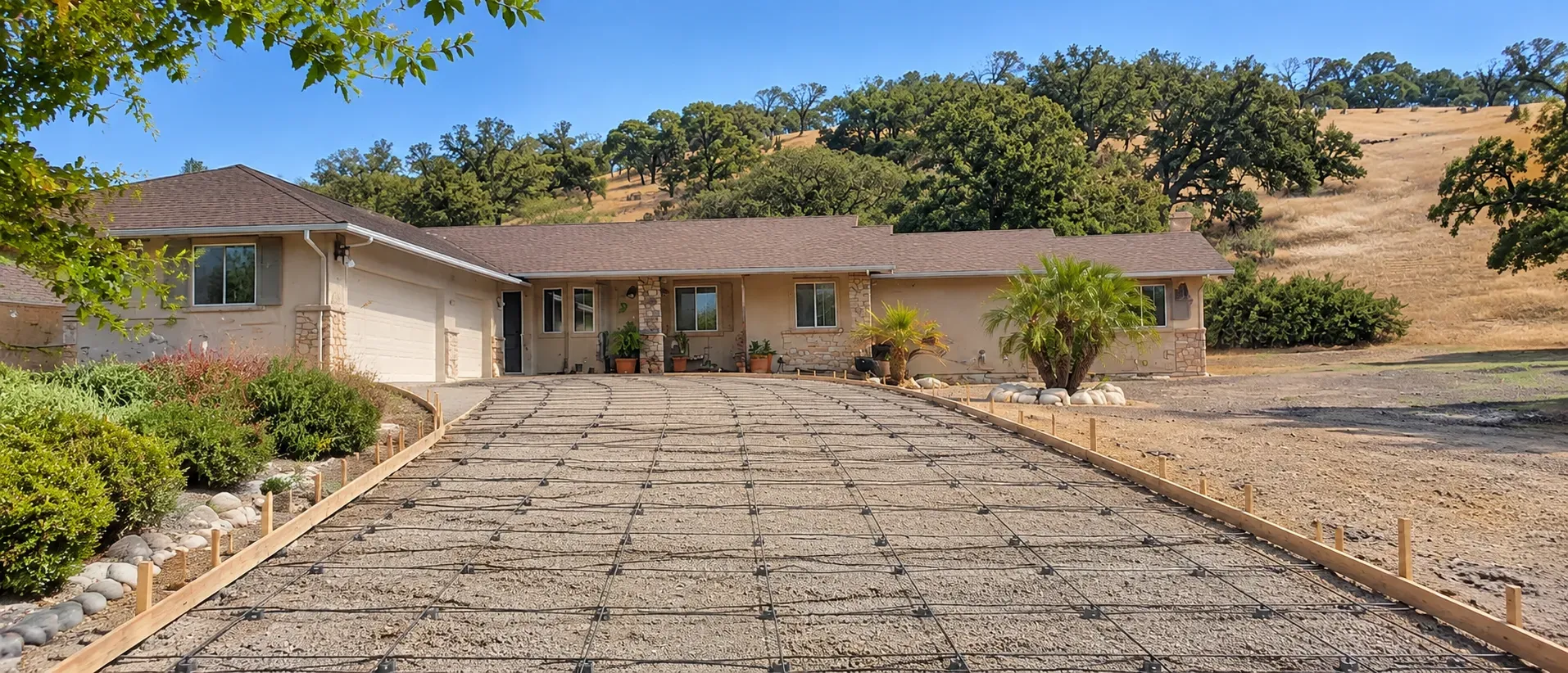
We pour driveways built for Lakeside's larger lots, with wider aprons and thicker edges where RVs, trailers and extra vehicles need the room. A typical driveway runs four inches thick with rebar or wire mesh set into a compacted gravel base, and the slab holds foot traffic within a day and vehicle weight after about a week.

We plan every driveway around how you actually use the space, wide enough for the vehicles, RVs or trailers you park at home, with the apron graded to meet the street cleanly. Getting the base compaction and slope right the first time is what keeps a driveway from cracking or pooling water years down the road, so that's where we spend the extra attention a lot of crews skip.

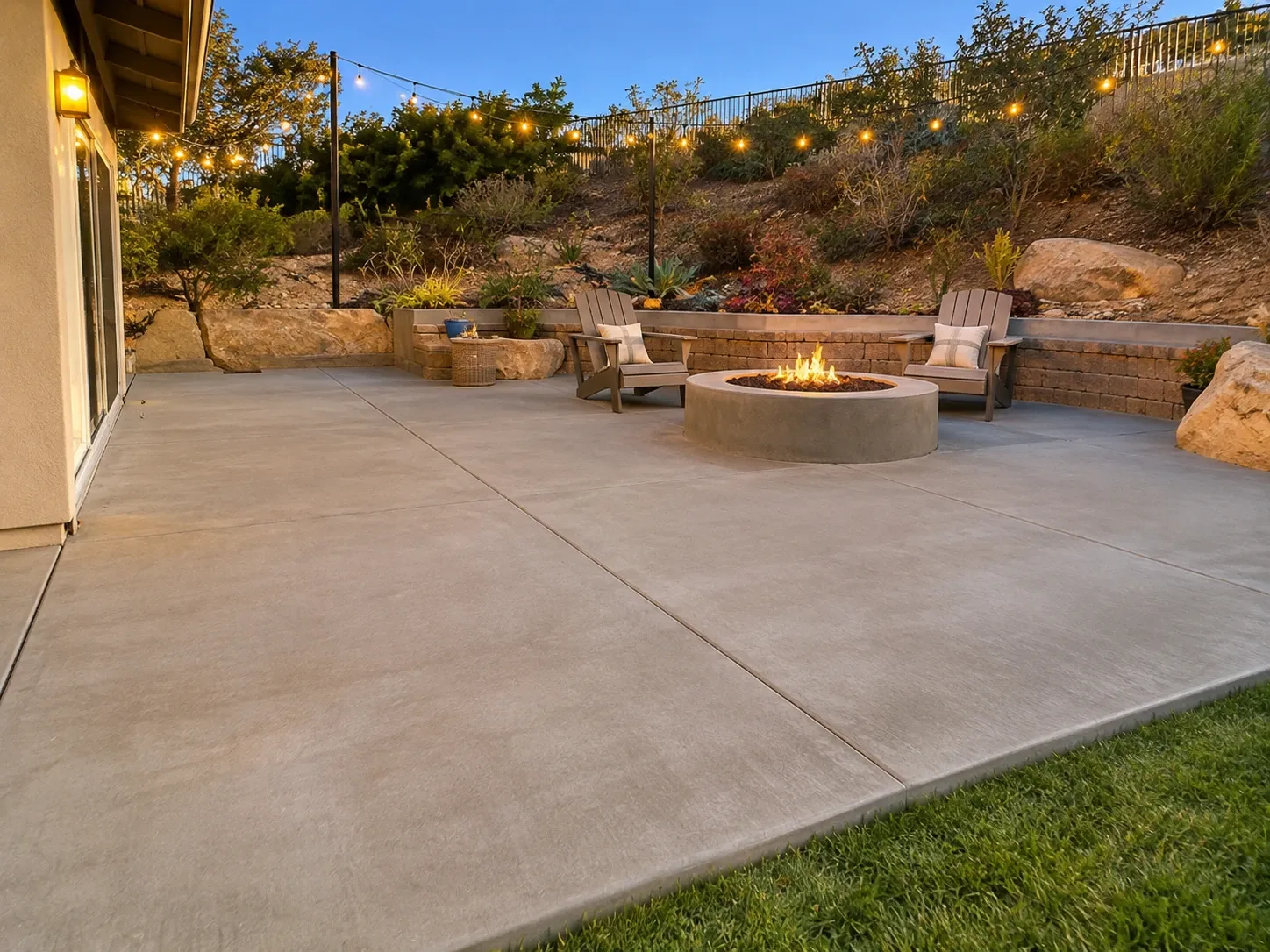
A large new concrete patio with saw-cut joints and a round concrete fire pit, outdoor chairs and string lights at dusk, below hillside planting behind a low block wall.

Concrete Patios

A new patio turns your backyard into a real gathering space instead of a slab you happen to put a table on. We pour patios anywhere from a small 200-square-foot sitting area to a full 2,000-square-foot entertaining space, and every patio gets proper slope built in for drainage, something a lot of patios in this area are missing.

We walk through finish options with you before we pour anything, since a patio is where your family actually spends time outside, not just a slab you look at. A built-in fire pit is a common add-on to a patio project, and we size the base and surrounding pad to handle direct heat without cracking, planning clearances for gas or wood-burning setups before we pour.

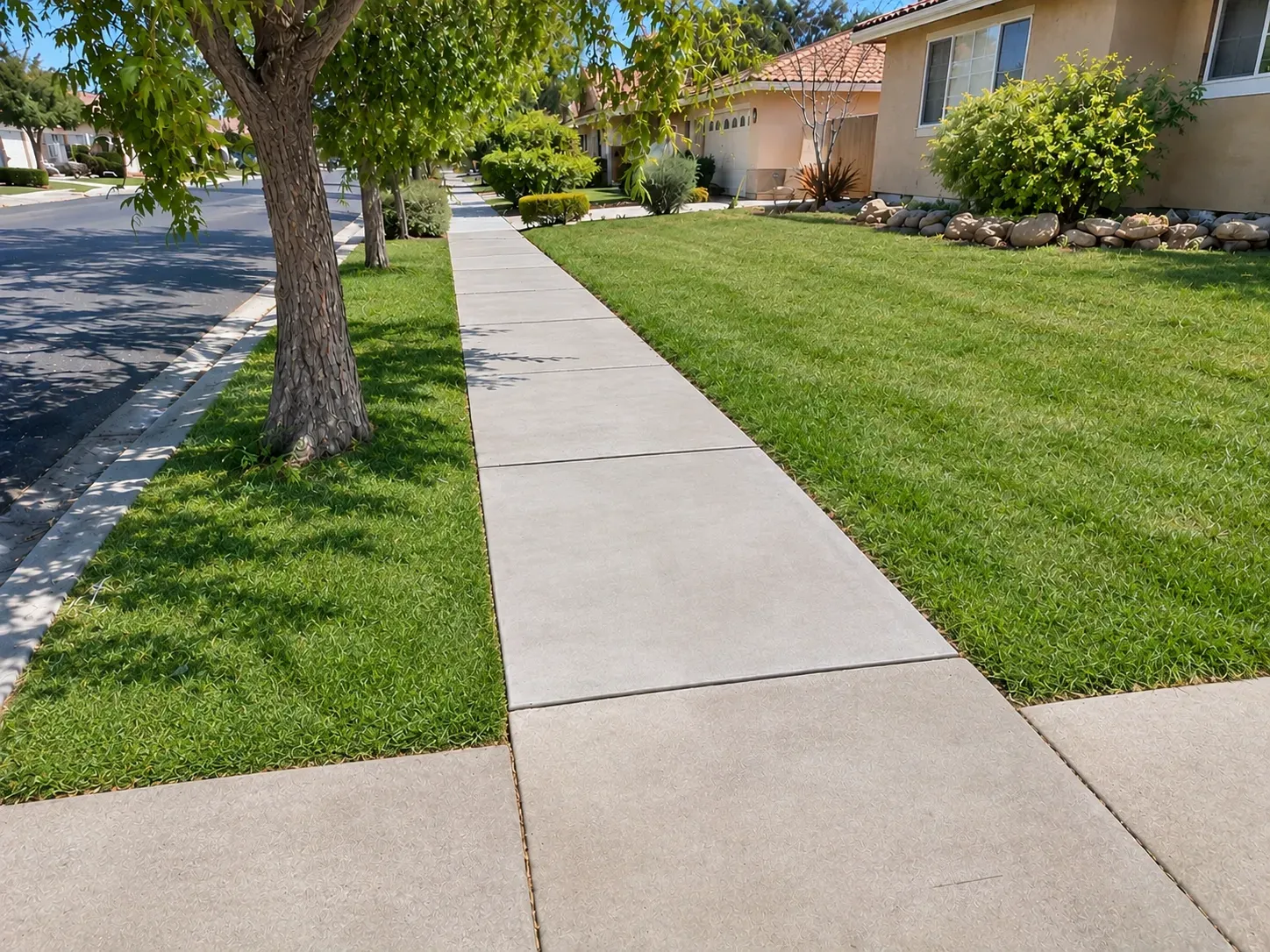
A clean concrete residential sidewalk with even panels and tooled joints running between a parkway lawn and front yards of stucco homes.

Concrete Sidewalks

A sidewalk is a small project with a real impact on how a property looks from the street. We pour new sidewalks and replace cracked or heaved sections for both homeowners and businesses, matching the existing grade and joint pattern so a repaired section doesn't stand out.

Sidewalk work in Lakeside often involves county right-of-way rules, especially where a sidewalk crosses public property, and we handle that permitting as part of the job. A heaved or uneven sidewalk is also a real trip hazard, so we look at root intrusion and base settlement, not just the visible crack, before deciding whether a section needs leveling or full replacement.

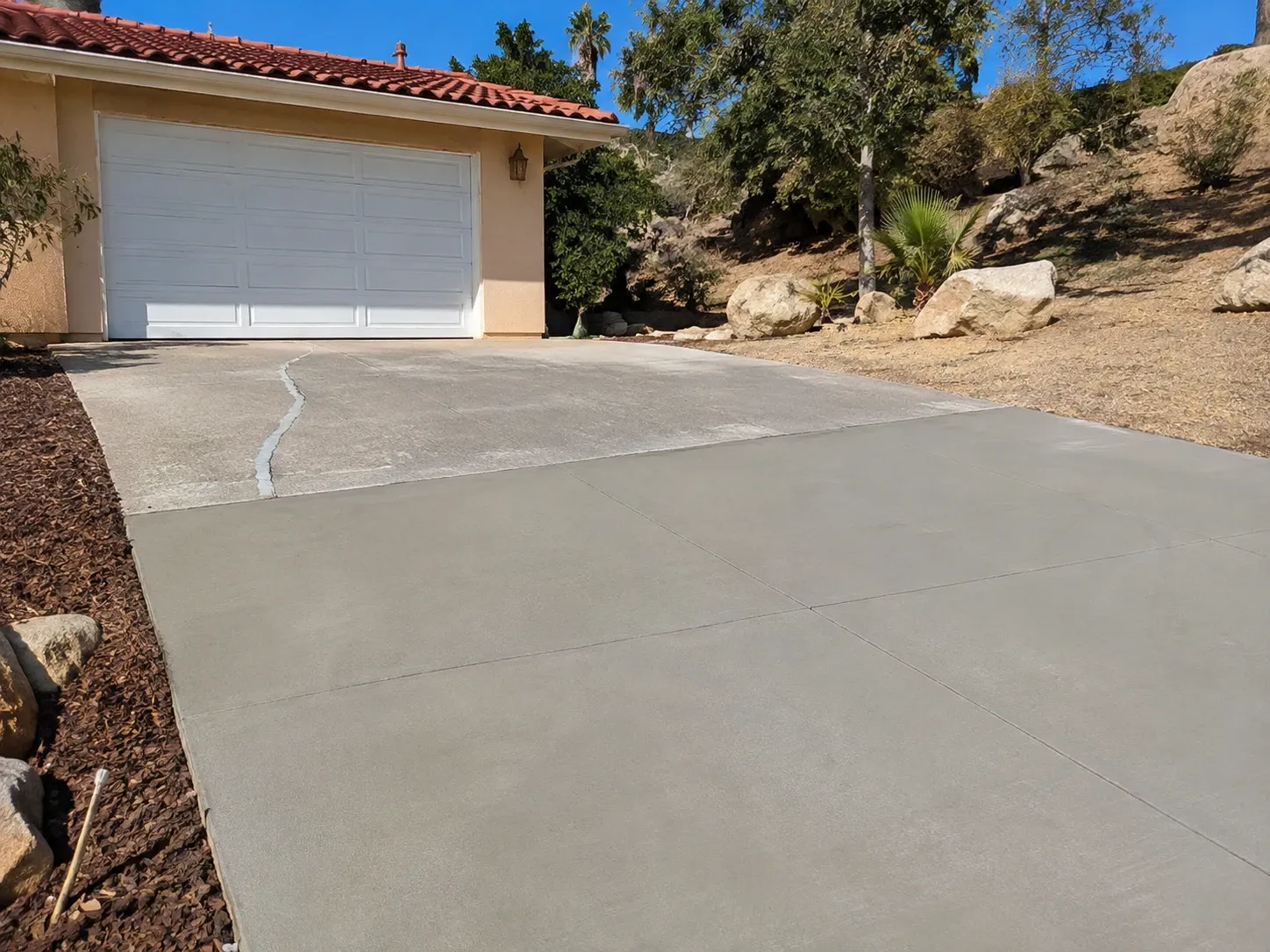
A driveway partway through repair: the lower section freshly resurfaced in an even grey finish with crisp joints, the upper section old concrete with a filled crack, below a stucco garage with a tile roof.

Concrete Repair and Resurfacing

Cracked, sunken, uneven or worn concrete gets fixed at the cause, not patched over. We repair surface cracks and level sunken sections when the base underneath is still solid, and we resurface worn-but-sound slabs with a fresh, plain functional layer instead of a full tear-out. Leveling and crack repair are both real sub-services under this same diagnosis-first approach, whether it's a hairline crack or a section that's settled from erosion or clay movement.

Driveway crack repair and resurfacing is one of the most common calls we get in Lakeside, especially on older slabs that have shifted with the hillside terrain around town. If the base has failed, we say so and recommend removal and a new pour instead of a repair that won't hold. We run the same cause-first diagnosis on commercial lots and walkways too, sectioning off part of a property to repair while the rest stays open rather than requiring a full shutdown.

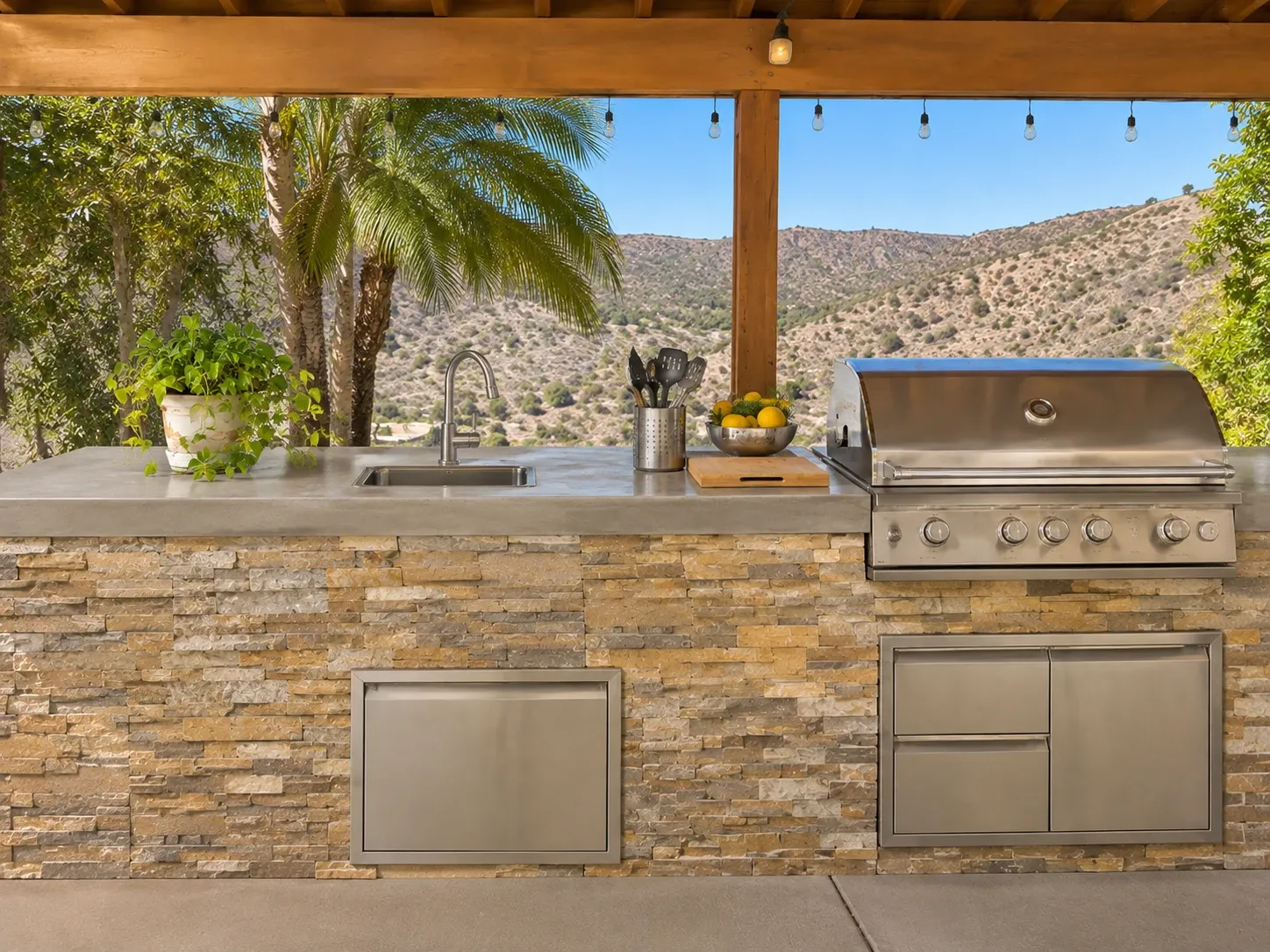
An outdoor kitchen with a long sealed grey concrete countertop with a square edge, a built-in stainless grill and sink on a stone-veneer base, under a covered patio overlooking dry hills.

Concrete Countertops

Concrete countertops bring a custom, one-of-a-kind surface into a kitchen or outdoor cooking space that slab granite or quartz can't match. Each countertop gets cast and finished to your exact dimensions, with integral color or a sealed natural gray finish depending on the look you want.

We build forms on-site or in our shop depending on the project, and every countertop gets sealed to resist staining from oil, wine and everyday kitchen use. Edge profile is a real decision too, a square edge reads modern while a rounded or chiseled edge reads more organic, and we template the exact cabinet or base dimensions before casting so the fit is right the first time.

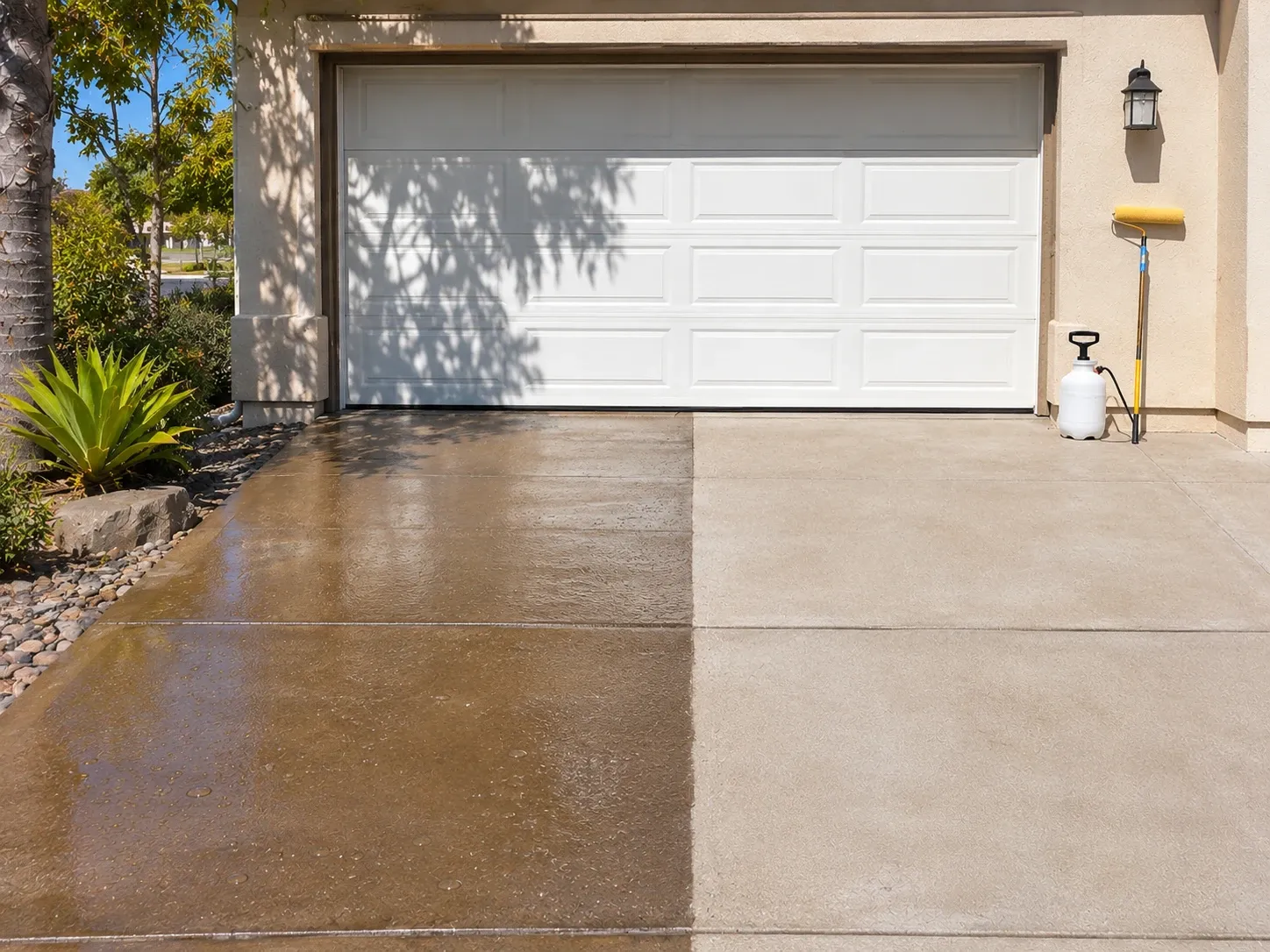
A driveway half sealed and half bare: the sealed side darker with a glossy sheen and water beading, the unsealed side pale and dry, with a sprayer and roller against the garage wall.

Concrete Sealing

Sealing protects concrete from UV fading, oil stains and the sun San Diego County gets most of the year. We reseal decorative work every two to three years and reseal plain driveways and patios on a similar cycle to keep water and stains from soaking into the surface.

We use a penetrating sealer on plain gray concrete and a film-forming sealer on decorative work, since the two serve different jobs and a film sealer on plain flatwork can actually trap moisture underneath it. Skipping this step is the single most common reason we see otherwise-good concrete start looking worn years before it should.

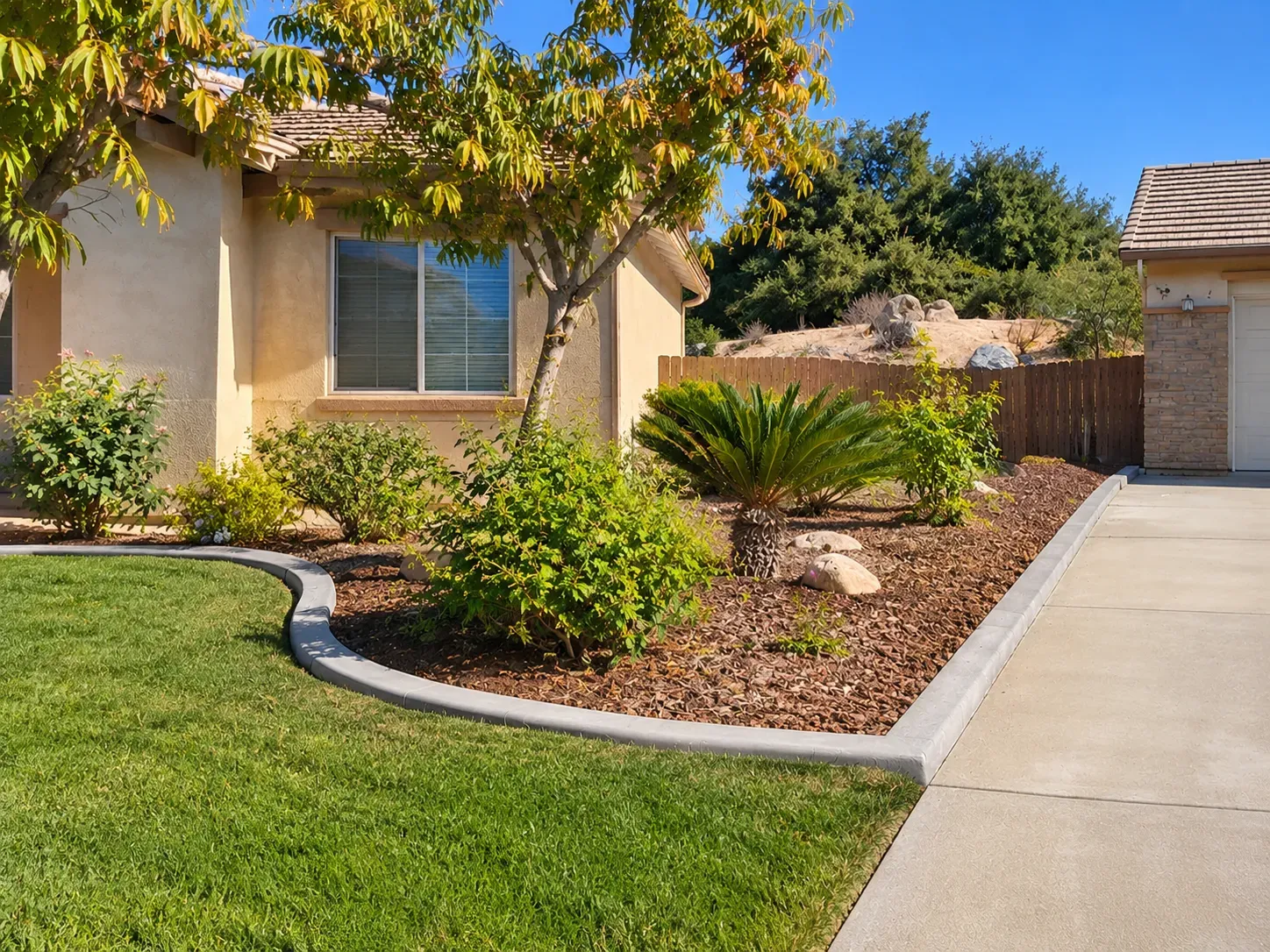
A smooth concrete landscape curb curving between a green lawn and a mulched planting bed, then running straight along the driveway of a stucco home.

Concrete Edging & Landscape Curbing

Clean concrete edging separates lawn from planting beds, driveways from landscaping, and keeps mulch and gravel where you actually want it. We pour continuous curbing in straight runs or curves, finished smooth or with a light broom texture to match the rest of your hardscape.

It's a smaller job than a driveway or patio, but it's one of the easiest ways to make a yard look finished rather than half-done. We set the curb depth below grade enough to stay put through normal yard work and irrigation, rather than a shallow pour that heaves loose within a season or two.

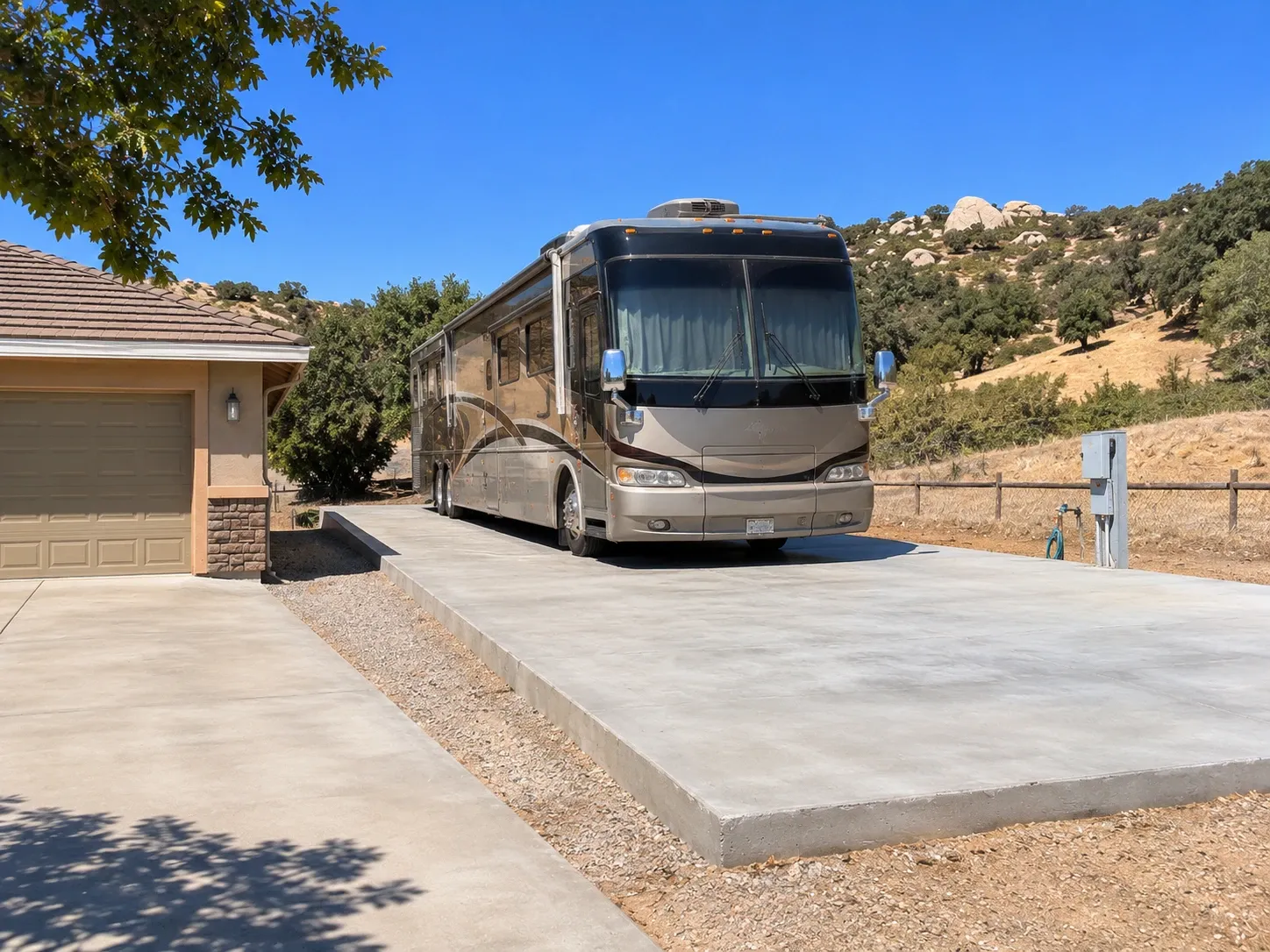
A motorhome parked on a thick new concrete RV pad beside a ranch home, with a power pedestal and water hookup at the pad edge and boulder-strewn hills behind.

RV & Trailer Pads

Lakeside's bigger lots mean a lot of homeowners park an RV, boat or trailer at home instead of paying for off-site storage. We pour dedicated RV pads sized and reinforced for the real weight of a loaded RV or trailer, a different job from simply stretching out a driveway slab.

A proper pad runs five to six inches thick in most cases, thicker than a standard driveway, with reinforcement to match. It's a job we specifically ask about during the estimate, since a lot of larger-lot homeowners don't realize a dedicated pad is an option until we bring it up. We also pour the pad with hookup access in mind, leaving room and proper grading for a sewer connection, water line or electrical pedestal if you're setting up full hookups.

Commercial Concrete Services

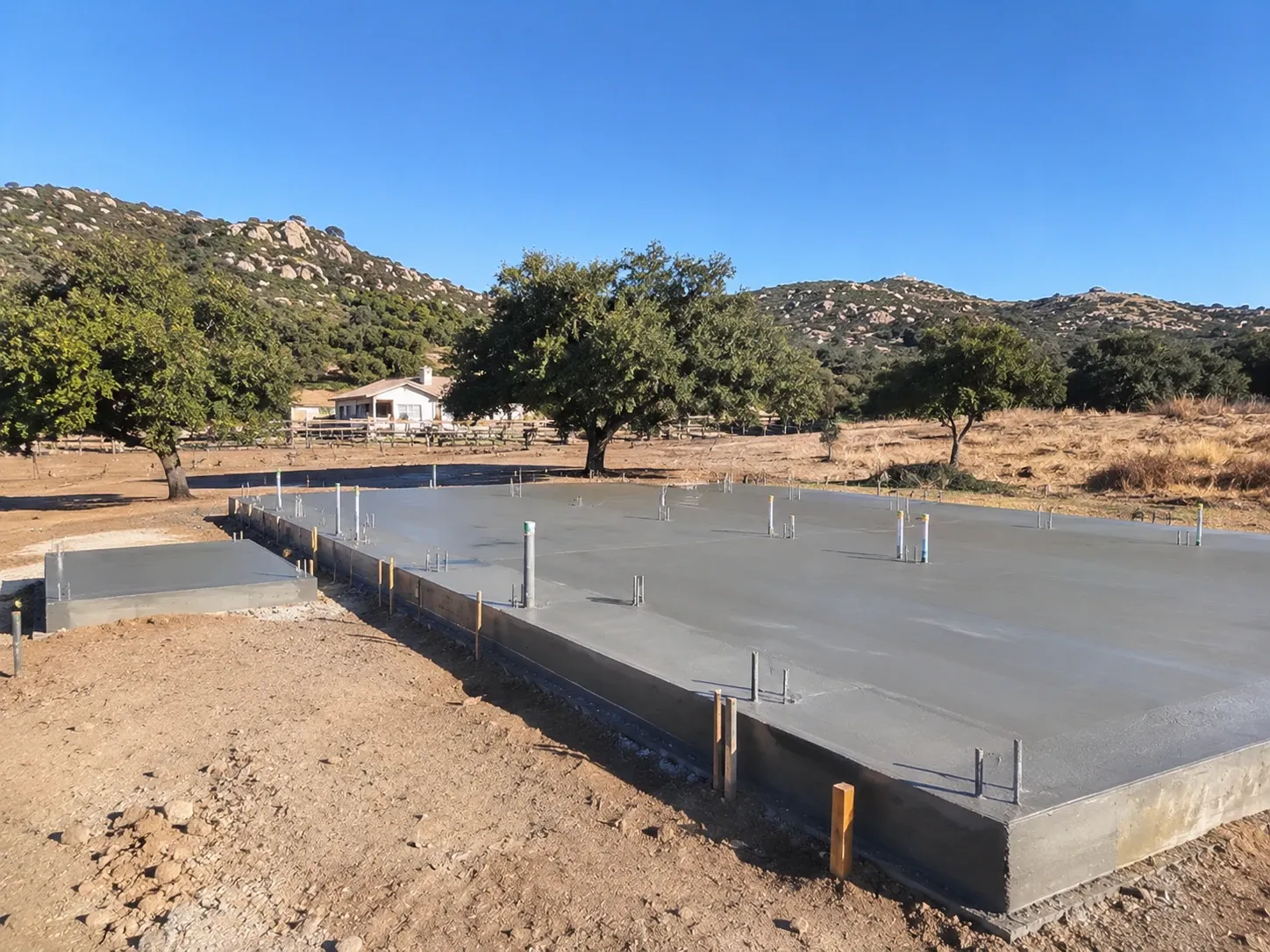
A freshly poured concrete foundation slab with thickened edges, conduit sleeves and anchor bolts on a rural lot, with a separate equipment pad, oak trees and boulder-strewn hills behind.

Concrete Foundations

Sheds, barns, outbuildings, equipment enclosures and utility structures all need a foundation sized for the actual load going on top of them, not a generic slab. We pour foundations, footings and equipment pads for working rural properties and commercial sites across Lakeside and East San Diego County, sizing reinforcement and thickness to what's actually going on the pad rather than a one-size-fits-all spec.

We coordinate pad layout with electrical and plumbing contractors ahead of the pour, since moving a conduit sleeve after concrete is down costs far more than planning for it up front. For warehouse and industrial space, we build flooring to the flatness and strength a facility's forklift and racking traffic actually needs, a different standard than a standard foundation slab. When a foundation settles or shifts, we also handle underpinning, adding support beneath it rather than demolishing and rebuilding the structure above, after assessing whether the cause is soil movement, erosion or a base that was never compacted properly.

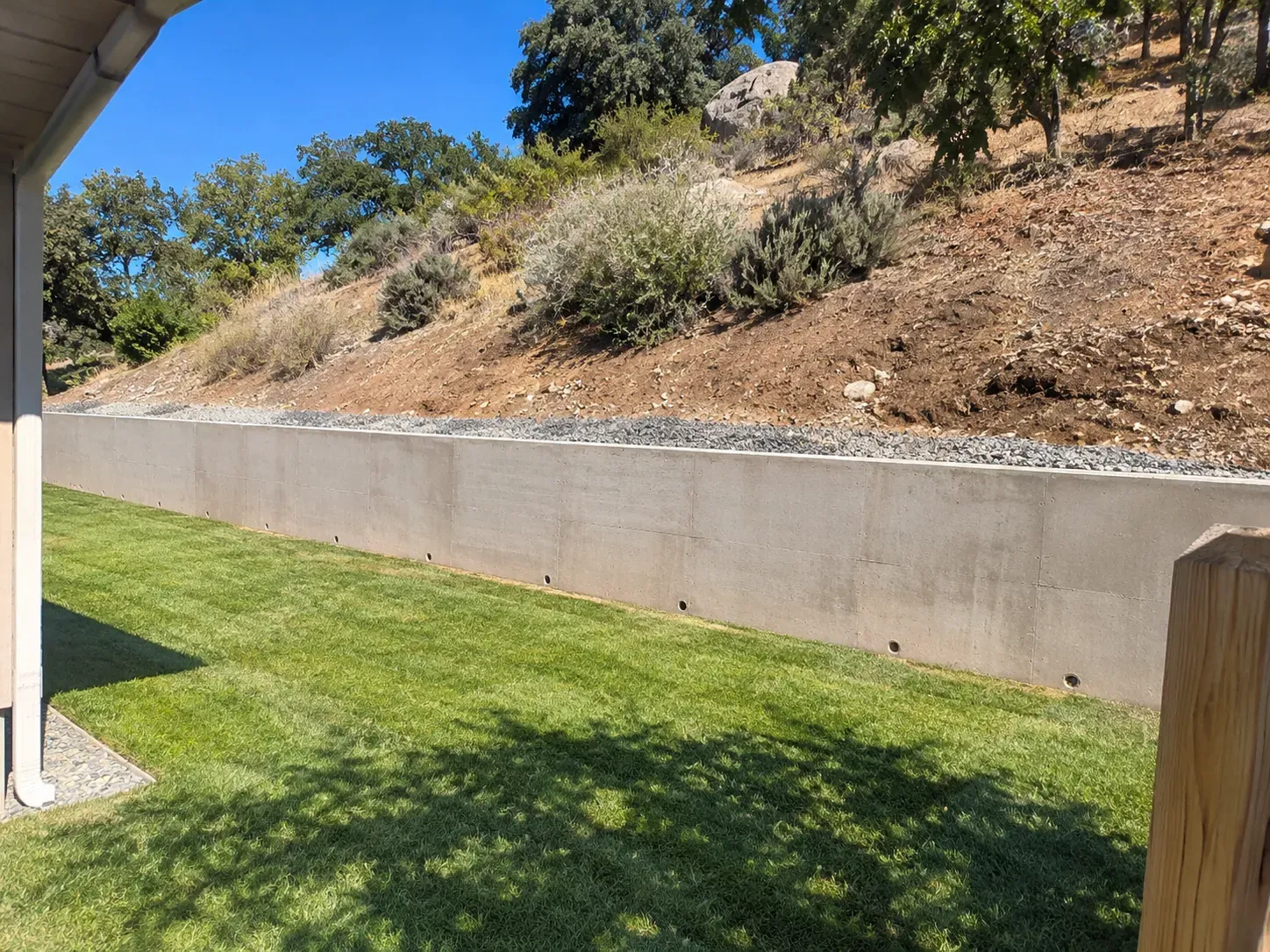
A poured concrete retaining wall holding back a hillside, with weep holes along its base, drainage gravel along the top and a new lawn in front.

Concrete Retaining Walls

Retaining walls hold back soil on sloped lots and create usable flat space where there wasn't any. We pour concrete retaining walls and build block and segmental walls depending on height, budget and how the wall needs to look, engineering anything over three to four feet and handling the permit that comes with it.

Lakeside's hillside lots need retaining and slope work engineered for the actual grade, with drainage, backfill and footing specs sized for the slope rather than borrowed from a flat-ground job. Skipping proper drainage is the most common reason a hillside wall fails, so we build gravel backfill, weep holes and drainage pipe into every wall from the start, whether it's a residential slope or a commercial site that needs retaining just to create a usable building pad.

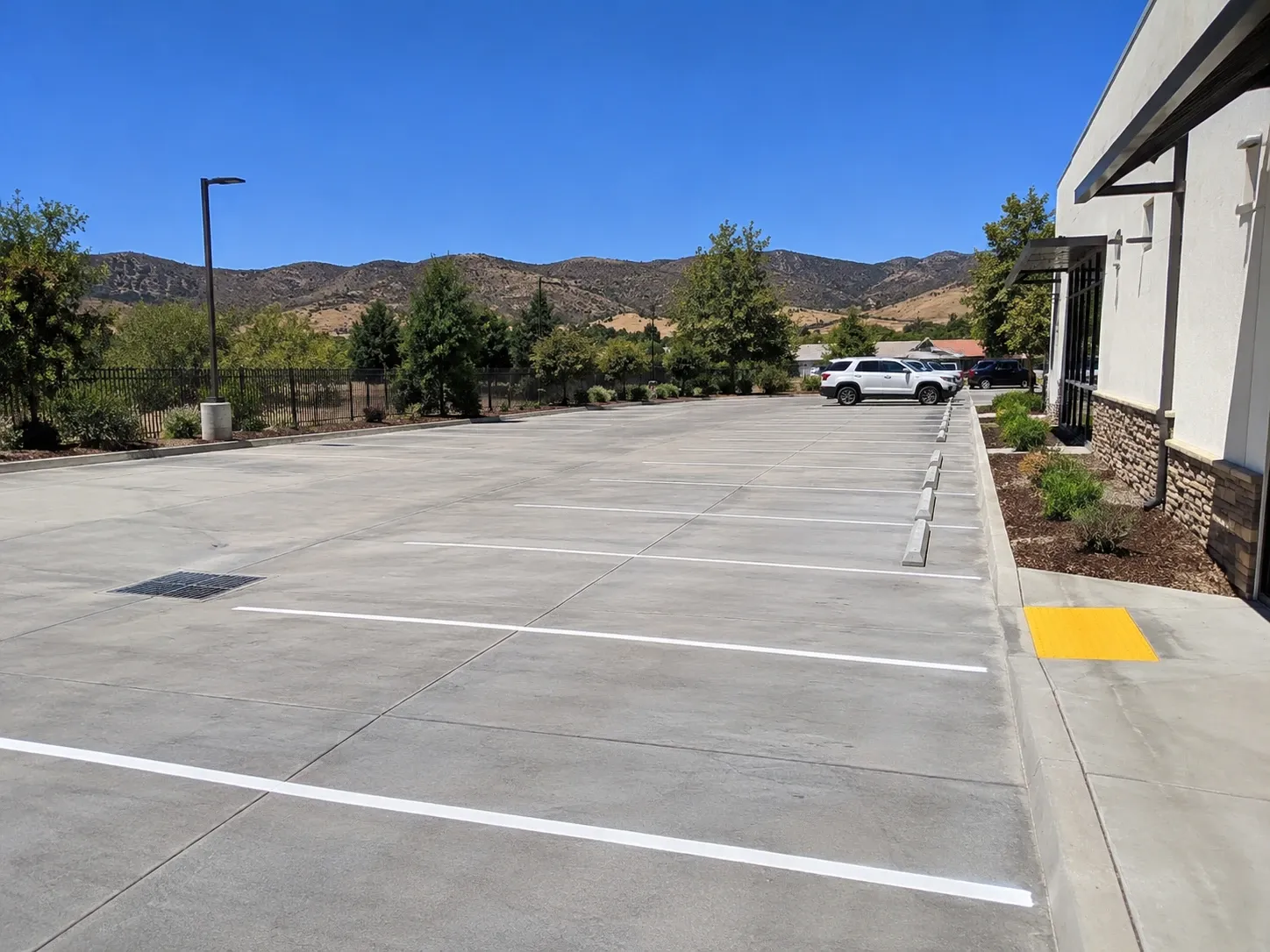
A new concrete parking lot with fresh white stall striping, saw-cut expansion joints, a drain inlet and wheel stops beside a commercial building, with dry hills behind.

Concrete Parking Lots

Parking lots take constant vehicle load, so the base prep underneath matters more than it does on a driveway. We grade, compact and pour commercial parking lots with drainage designed in from the start, since standing water is the fastest way to break down a lot's surface.

We also handle striping layout coordination so the lot is ready to use the day it opens, and we build in expansion joints at intervals sized for the lot's real traffic load rather than a generic spacing. A parking lot that skips proper joint spacing cracks in predictable, avoidable patterns within a few years.

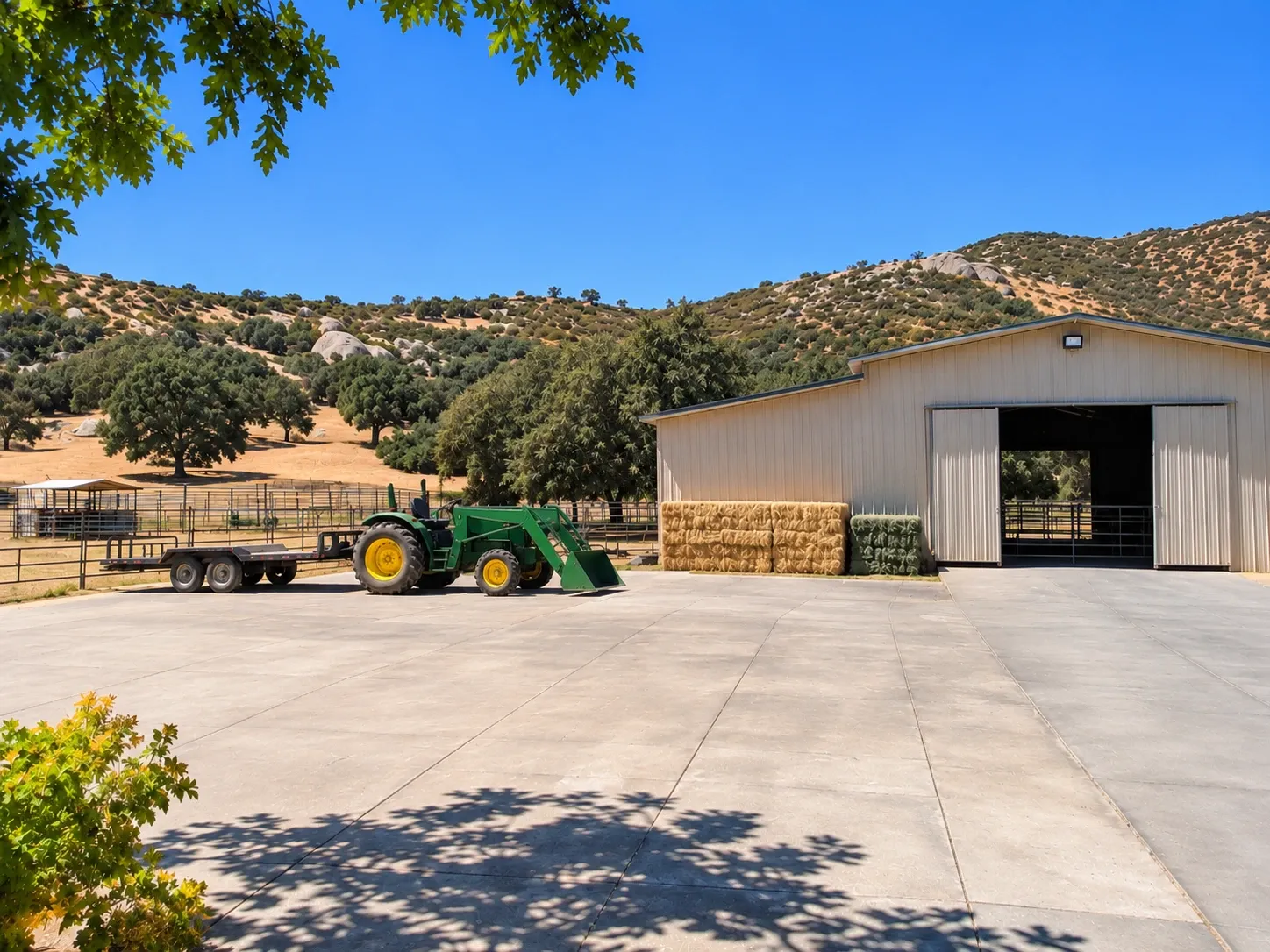
A broad concrete equipment pad and access drive in front of a metal ranch barn, with a tractor and trailer parked on it, hay bales and rail-fenced paddocks below boulder-strewn hills.

Agricultural & Ranch Concrete

Working ranch and agricultural properties around Lakeside need concrete that holds up to equipment, livestock and daily wear a residential slab was never designed for. We pour equipment pads, barn and outbuilding slabs, and access roads sized for tractors, trailers and heavy foot traffic rather than cars.

This includes equestrian facilities as much as working ranch operations: barn floors, wash racks and equipment pads sized for livestock traffic and the drainage a wash rack actually needs. A wash rack has to slope correctly so water and waste drain away instead of pooling, and a barn floor gets a broom finish for traction since a slick surface around horses is a real safety issue. Given how many horse properties and working ranches sit around Lakeside's rural edges, this is a real, regular part of what we do, not a one-off specialty.

Specialty Concrete Services

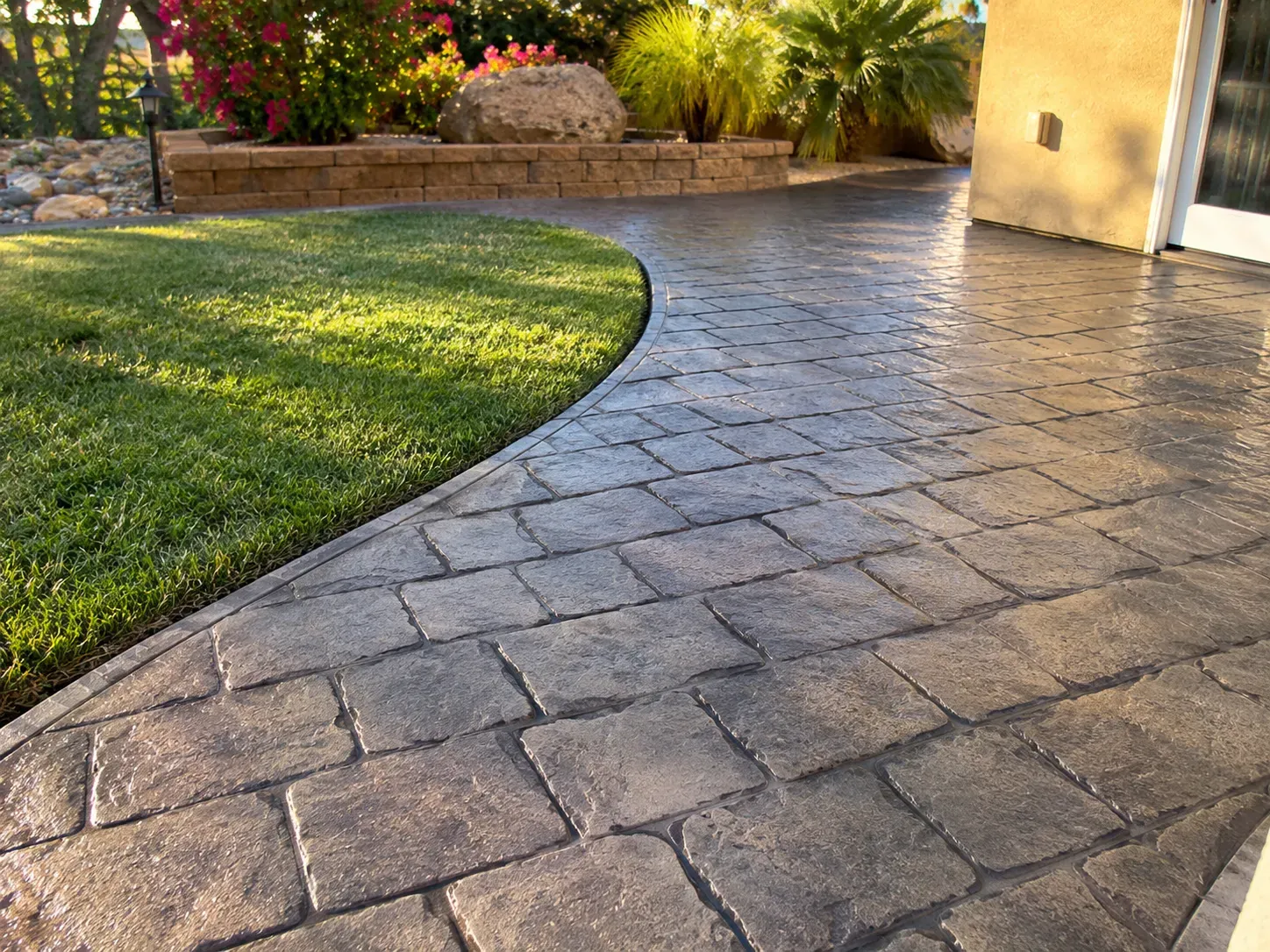
A sealed stamped concrete walkway in a charcoal cobblestone pattern curving cleanly along a lawn edge beside a stucco home, lit by low late-afternoon sun.

Stamped Concrete

Stamped concrete gives you the look of brick, cobblestone, slate or wood planking at a fraction of the cost of the real material. We press the pattern into the slab before it sets and add a release-color agent on top of the base color for depth and variation.

Properly sealed stamped concrete holds its color and pattern for 25 or more years, with resealing every two to three years as the only real maintenance. Pattern alignment at seams and edges is where a lot of stamped jobs go wrong, so we lay out the full pattern plan before the first stamp goes down, not partway through the pour.

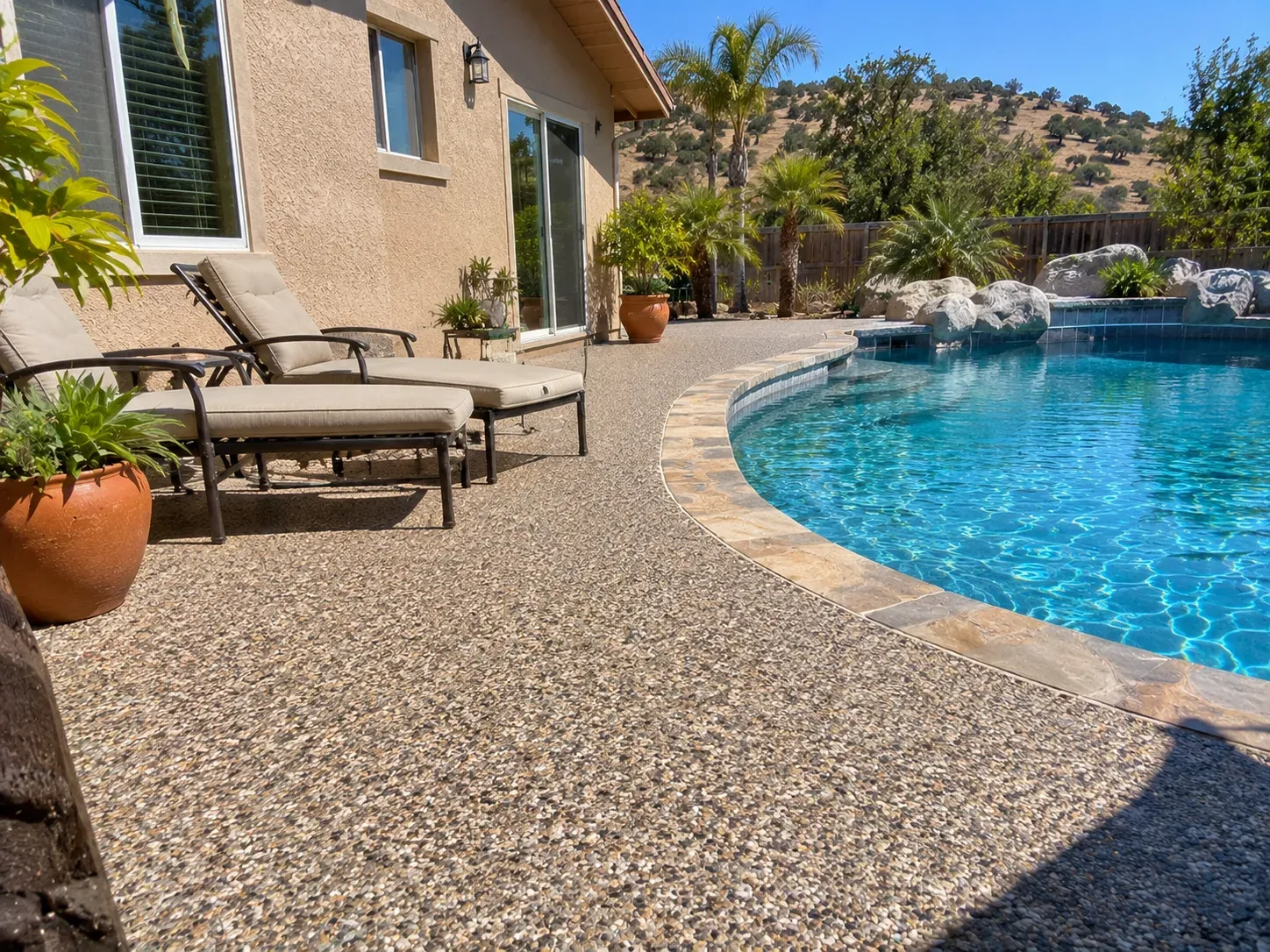
An exposed-aggregate concrete pool deck curving around a blue pool with stone coping, with loungers beside a stucco home and oak-dotted hills behind.

Polished Concrete, Exposed Aggregate & Overlays

Polishing grinds concrete down through progressively finer grits until the surface reaches a smooth, reflective finish without a coating sitting on top of it, one of the lowest-maintenance floor finishes available for a home or commercial space. Exposed aggregate washes away the top layer of cement paste before the slab fully cures, revealing the stone aggregate mixed into the concrete itself for a naturally slip-resistant surface that works well on pool decks and walkways.

An overlay is a thin, decorative layer poured over existing structurally sound concrete, letting you change the look without tearing anything out. This is different from resurfacing, which restores a worn slab to a plain functional finish rather than a new design. We also apply protective and decorative coatings for surfaces where appearance and durability both matter, prepping the surface first so the coating actually bonds instead of peeling within a year or two.

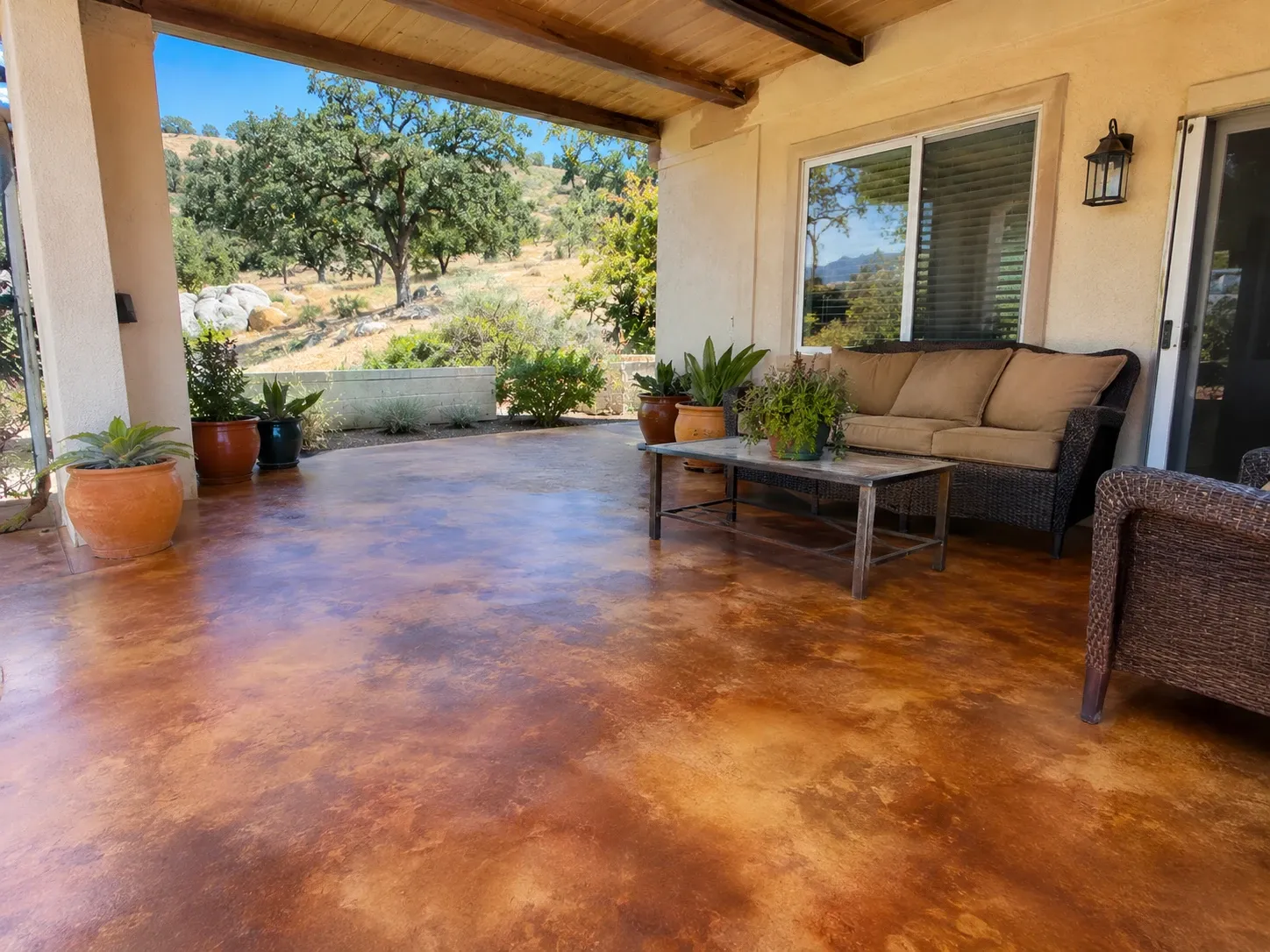
A covered patio with an acid-stained concrete floor in mottled amber, brown and caramel tones, sealed with a soft sheen, with wicker furniture, potted plants and a view of oak-dotted hills.

Colored & Acid-Stained Concrete

Color gets built into concrete two main ways: integral color mixed through the entire pour, or acid staining applied to cured concrete for a mottled, variegated look no two slabs produce the same way twice. We do both, depending on whether you want uniform color throughout the slab or a more natural, stone-like variation on the surface.

Acid staining in particular works best on concrete that's already in good structural shape, since the stain reacts with the existing surface rather than adding a new layer on top of it. Integral color costs more upfront than staining after the pour, but it won't wear off the way a surface-applied stain eventually can on a high-traffic walkway or driveway.

Lakeside Elite Concrete's Concrete Expertise in Lakeside, CA

Lakeside sits on a mix of decomposed granite and clay soils across East San Diego County's hillside terrain, and that combination changes how concrete has to be built here. Decomposed granite drains well but compacts differently than valley-floor soil, so base prep on a Lakeside pour often needs more attention to compaction depth than the same job would need in a flatter, sandier market. Hillside lots add drainage and slope considerations on top of that, especially for retaining walls and any pour near a grade change.

Lakeside's larger residential lots and working ranch properties bring their own technical demands. A wash rack for horses needs a specific slope to drain properly without pooling at the horse's feet, and a barn floor needs to resist the wear of hooves and daily hosing down in a way a garage floor never has to. RV pads need thicker, more heavily reinforced slabs than a standard driveway because of the real weight involved. We keep up with current concrete standards and technique through ongoing trade education, including the industry's annual World of Concrete conference, so the methods we use reflect current best practice rather than how the trade did things a decade ago.

Why We're the Best Concrete Company in Lakeside, CA

Quality Materials, Proper Prep & Craftsmanship

Every pour starts with ready-mix concrete meeting ASTM C94 standards, not a cheaper off-spec mix. We reinforce slabs with rebar or wire mesh at the thickness the job actually calls for, and we compact the base properly before any concrete goes down, especially on Lakeside's decomposed granite and hillside soil where skipping that step causes problems years later.

Our finishing crew works in-house. We don't sub out the actual pour to a different crew than the one that quoted it, so the finish you were shown in the estimate is the finish our own people deliver on pour day, start to finish.

A Team That Knows Lakeside's Terrain

We've built our process around the realities of this specific market: hillside lots, larger rural properties, and the RV pads and equestrian facilities that come with them. Pours get scheduled around East County's dry season to keep curing on track, and we pull county and city permits on anything that requires one, so every job starts with the paperwork already handled.

That local focus is why we get called back for the harder jobs other crews pass on. A hillside lot or a working ranch property needs judgment calls a flat-lot-only crew doesn't usually have to make, and we've made those calls often enough that they're routine for us.

Guarantees, Warranties & Client-First Service

Every job comes with a written workmanship warranty, and we guarantee our crack-control joints when base prep follows spec. Most of our new business comes from referrals across Lakeside, Santee, El Cajon and Ramona, which tells us the work is holding up after we leave.

The person who gives you the estimate is the same person involved through the final pour, not a sales rep who disappears once the contract is signed. If something about the finished work doesn't match what we agreed to, you call the same person who quoted it, not a general office line that passes you around.

Concrete Design and Installation Timeline in Lakeside, CA

How Long Does Concrete Work Take?

A standard driveway or patio usually takes two to four days from forming to final finish, not counting cure time before heavy use. Foundation and larger commercial pours can run one to two weeks depending on scope.

Hillside grading, county permit review and dry-season scheduling demand can all add time, so we give you a realistic window during the estimate instead of a best-case number that slips once the job starts. Decorative work adds time too, since a stamped or colored finish has to happen within a narrow window while the concrete is still workable, and we schedule crew size around that window rather than rushing it.

Project Timeline & Milestones

  1. 1. Property Walk & Access Check

    We walk the property, check access and, on hillside or larger lots, assess grading and drainage needs.

  2. 2. Finish & Color Planning

    You choose finish, color and pattern if the project is decorative.

  3. 3. Written Scope & Price

    You get a clear scope and price in writing before anything is scheduled.

  4. 4. Demolition & Removal

    Old concrete comes out if the project calls for it.

  5. 5. Base Prep

    We excavate, compact and set drainage gravel, adjusting depth for decomposed granite or hillside soil.

  6. 6. Forming & Pour

    Forms go in, reinforcement is set, and concrete is poured and leveled.

  7. 7. Finishing

    Broom, stamp, exposed aggregate or color finish gets applied while the concrete is still workable.

  8. 8. Curing & Sealing

    The slab cures before foot and vehicle traffic, and sealing goes on once it's ready.

  9. 9. Final Walkthrough

    We check the finished work with you before calling the job done.

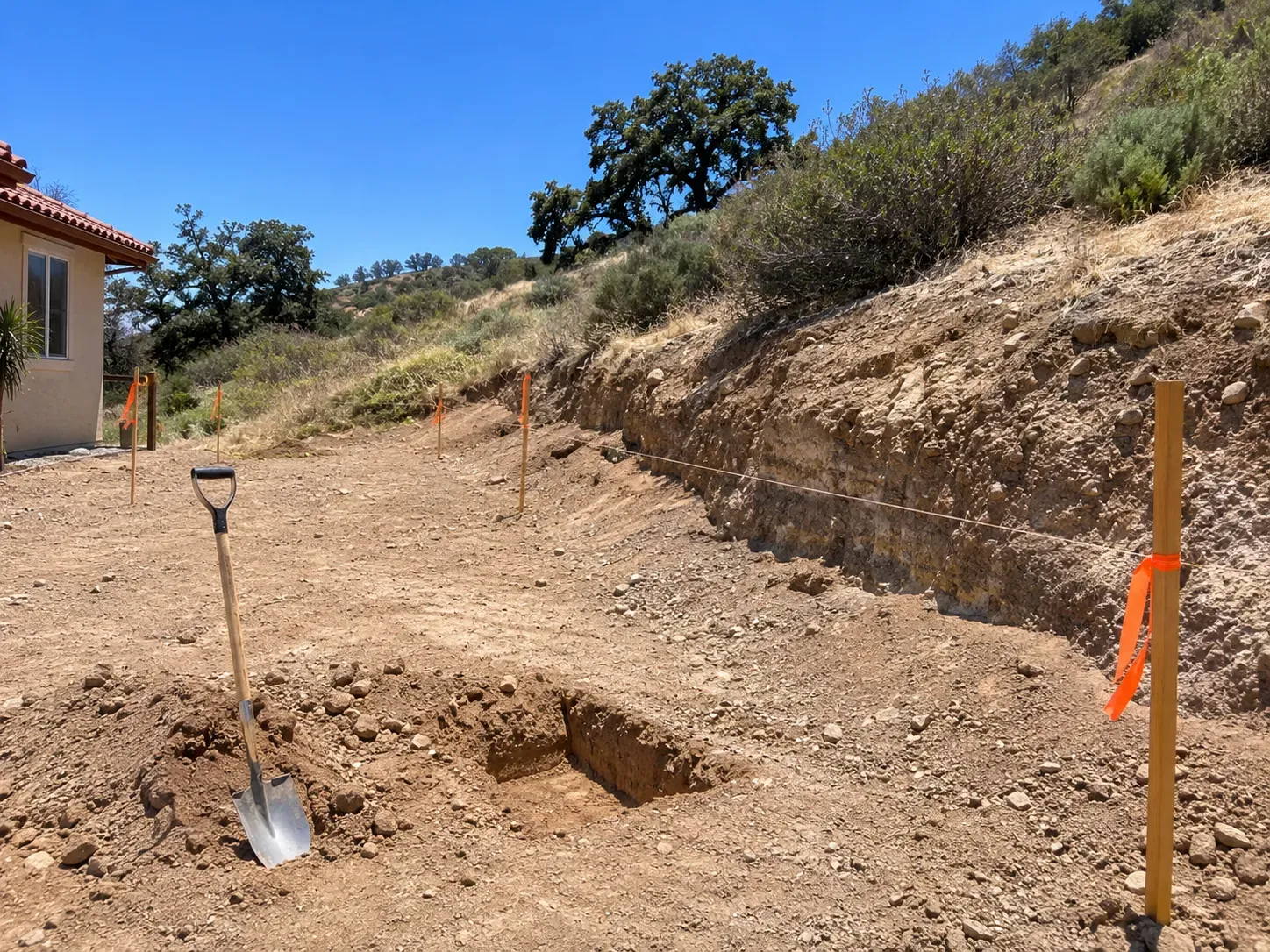
A graded hillside building pad with a cut bank showing the soil layers, survey stakes with orange flagging and a string line, and a test hole dug to check the soil, below chaparral and oaks.

Soil & Grading Assessment (Hillside and Larger-Lot Sites)

Hillside lots and larger rural properties often need a real grading and drainage assessment before we can quote accurately, beyond what a standard flat-lot site visit covers. We check slope, existing drainage patterns and soil compaction on these sites specifically, since getting it wrong means a wall or slab that fails within a few years instead of lasting decades.

A standard flat residential driveway or patio doesn't typically need this extra step. On a hillside lot, this assessment also tells us whether a retaining wall needs to go in before the main pour, or whether the existing grade can be worked with as-is.

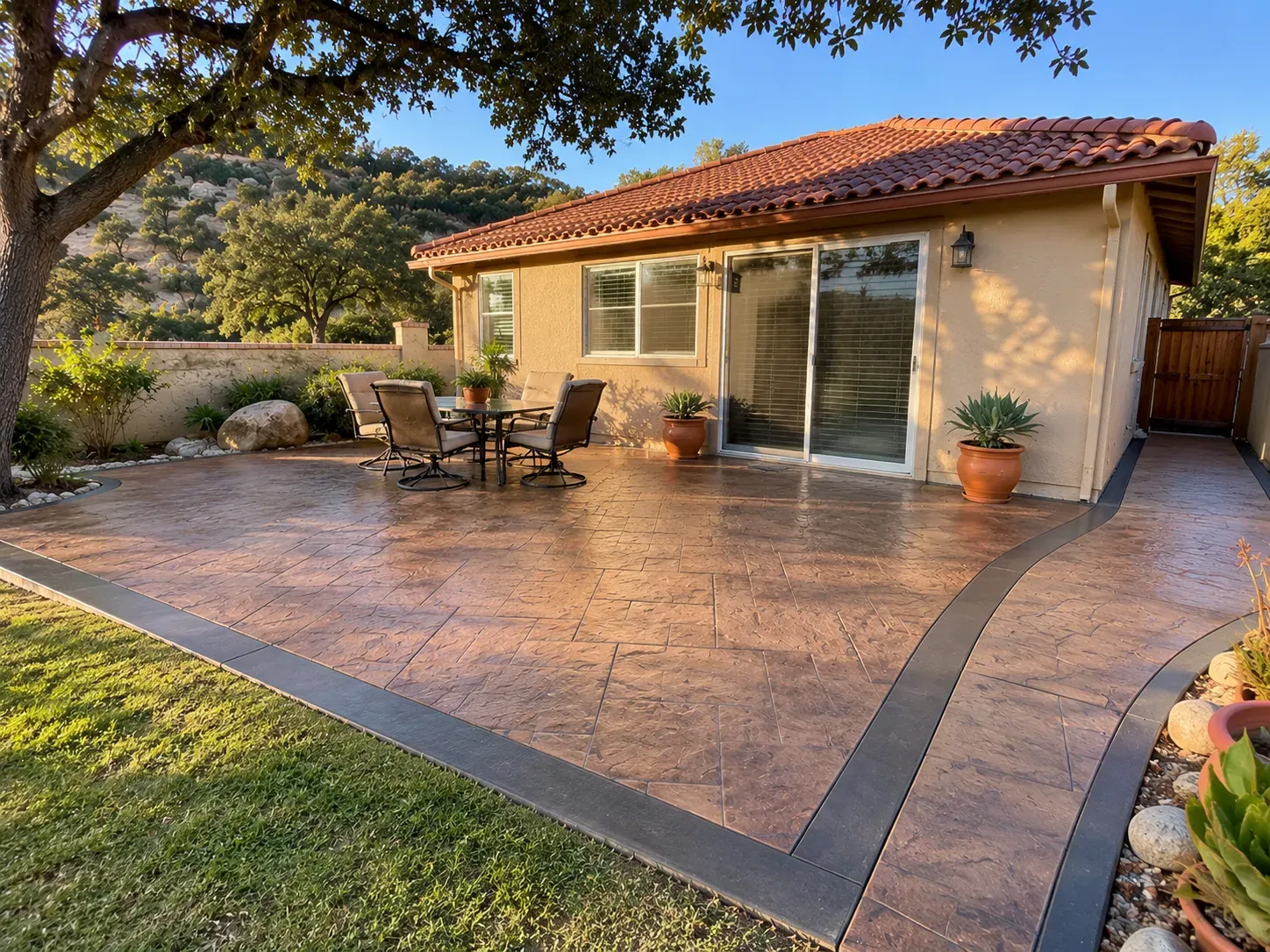
A finished stamped concrete patio in a warm ashlar-slate pattern with a charcoal border band and a matching walkway to the side gate, behind a stucco home with a tile roof.

Design & Pattern Selection (Decorative Work)

Stamped, colored and exposed aggregate projects involve real decisions before we pour anything: pattern choice, base color, release-agent color, and in some cases a sample board poured on-site so you see the actual finish before committing. A color choice that looks right on a small sample can read very differently across a full driveway or patio, so we try to show finish options at close to real scale.

We walk through these choices during the proposal stage so there are no surprises on pour day. For a larger project, we'll sometimes pour a small physical sample panel on-site in the actual proposed color and pattern, since a sample board held up against your house reads differently than the finished slab in full sun.

Concrete Cost and Pricing in Lakeside, CA

What Affects Concrete Cost?

Labor, materials, project scope and site access all move the price of a concrete job up or down. Decorative finishes cost more than plain broom finish, and hillside or hard-to-access lots take longer to prep and pour than a flat, open site. Thickness and reinforcement affect price too, since an RV pad or a commercial equipment pad needs more material and steel than a standard residential slab of the same square footage.

County permit fees apply to driveway replacements, retaining walls over a certain height and most new foundation work. Timing can move price too: demand runs higher in spring and summer, so a winter booking sometimes lands a better schedule and price than peak season.

How Much Does Concrete Cost in Lakeside?

Most flatwork gets a standard broom finish unless you ask for something smoother or more decorative - see Decorative Finish Upgrades below.

Base Installation
ProjectPrice RangeWhat Drives the Price
Driveway$10–$18 per sq. ft.Thickness, base prep, access, decomposed-granite or hillside grading
Patio$12–$16 per sq. ft.Site access, slope and drainage work, size
Sidewalk / Walkway$10–$20 per sq. ft.Length, county right-of-way permitting
Pool Deck$15–$30 per sq. ft.Slip-resistant finish requirements, access
Foundation$12–$22 per sq. ft.Soil bearing capacity, required thickness and rebar spec, site grading, the load the slab needs to support
RV PadPriced per projectExtra thickness (5–6 in. vs. standard 4 in.) and reinforcement
Concrete Steps$500–$1,500 eachNumber of steps, width, railings, slope of the site
Retaining Wall (block or segmental)$250–$500 per linear ft.Wall height, ground slope, drainage design, site access
Retaining Wall (poured concrete)$350–$600 per linear ft.Wall height, ground slope, drainage design, site access, engineering (required over 3-4 ft)
Decorative Finish Upgrades (added to base installation price)
FinishAdditional CostWhat Drives It
Exposed aggregate+$2–$6 per sq. ft.Aggregate material choice
Stamped pattern+$5–$12 per sq. ft.Pattern complexity, number of colors
Integral color+$1–$3 per sq. ft.Built into the mix, the cheapest coloring option
Acid staining+$2–$8 per sq. ft.Single color vs. multi-color or layered design
Polished finish+$3–$8 per sq. ft.Densifier add-on for extra stain resistance
Repair, Resurfacing & Removal
ServicePrice RangeWhat Drives the Price
Resurfacing (base, standard broom finish)$8–$15 per sq. ft.Extent of surface wear
Decorative overlay upgrade+$6–$10 per sq. ft.Stamped or colored finish added on top of the resurface
Crack repair (minor)$1–$3 per linear ft.Crack width and depth
Structural crack repair$200–$500 per linear ft.Base condition, rebar exposure
Demolition and removal$3–$6 per sq. ft.Whether the old slab has rebar or wire mesh to cut out

These figures reflect typical Southern California pricing for this type of work. Your actual quote depends on your property's specific access, soil conditions and scope.

Budget Planning

Materials and labor usually make up the bulk of a concrete budget, with site prep and finish choice as the two biggest variables you control. A decorative finish like stamped or colored concrete adds real cost over plain broom finish, so decide early whether that's a priority or something to save on.

Hillside or larger-lot sites should budget extra for grading and drainage work that a flat residential lot wouldn't need. If you're planning multiple projects, like a driveway this year and a patio next, tell us up front, since sequencing the work can save on setup and access costs across both jobs.

Professional Concrete vs. Asphalt or Pavers

Concrete costs more upfront than asphalt but lasts significantly longer and holds up better to Southern California's sun and heat without softening or rutting. Pavers cost more than concrete per square foot and offer more design flexibility, but individual pavers can shift or settle over time in a way a properly poured slab won't.

Asphalt driveways typically need resealing every two to three years and full resurfacing within 15 to 20 years, where a well-built concrete driveway can last 40 years or more with basic sealing. Concrete also takes stamping, coloring and exposed aggregate finishes that neither asphalt nor standard pavers can match, which matters if curb appeal is part of the decision.

Hidden Costs & Additional Considerations

Decomposed granite and hillside soil can require extra excavation and compaction that a standard quote might not anticipate until we actually dig into the site. County permit fees apply to driveway replacements and most retaining walls, and tight access on some Lakeside lots can add equipment and labor time.

We flag anything like this during the site visit so it's in your written estimate, not a surprise after the job starts. Old concrete removal can also uncover problems underneath, like an eroded base or old plumbing, that weren't visible before demolition, and we price those as a separate change order rather than folding a guess into the original quote.

Financing / Payment Structure

We work on a standard payment-milestone structure: a deposit when you sign the proposal, with the balance due at completion. Larger commercial or multi-phase projects can be broken into milestone payments tied to specific stages of the work.

Ask us about your specific project during the estimate and we'll lay out the payment structure in writing. We don't ask for full payment up front on any project, residential or commercial, since you should see real progress on the job before the bulk of the money changes hands. The deposit covers materials and scheduling, and the final payment is due once you've walked the finished work with us and confirmed it matches the proposal.

Proudly Serving Lakeside and East San Diego County

Lakeside Elite Concrete serves Lakeside and the surrounding East San Diego County communities, including Santee, El Cajon, Eucalyptus Hills, Winter Gardens and the Lake Jennings area. We know this terrain, from Lakeside's larger rural and equestrian lots to the hillside properties scattered throughout East County, and we build every pour around the conditions specific to where it's going.

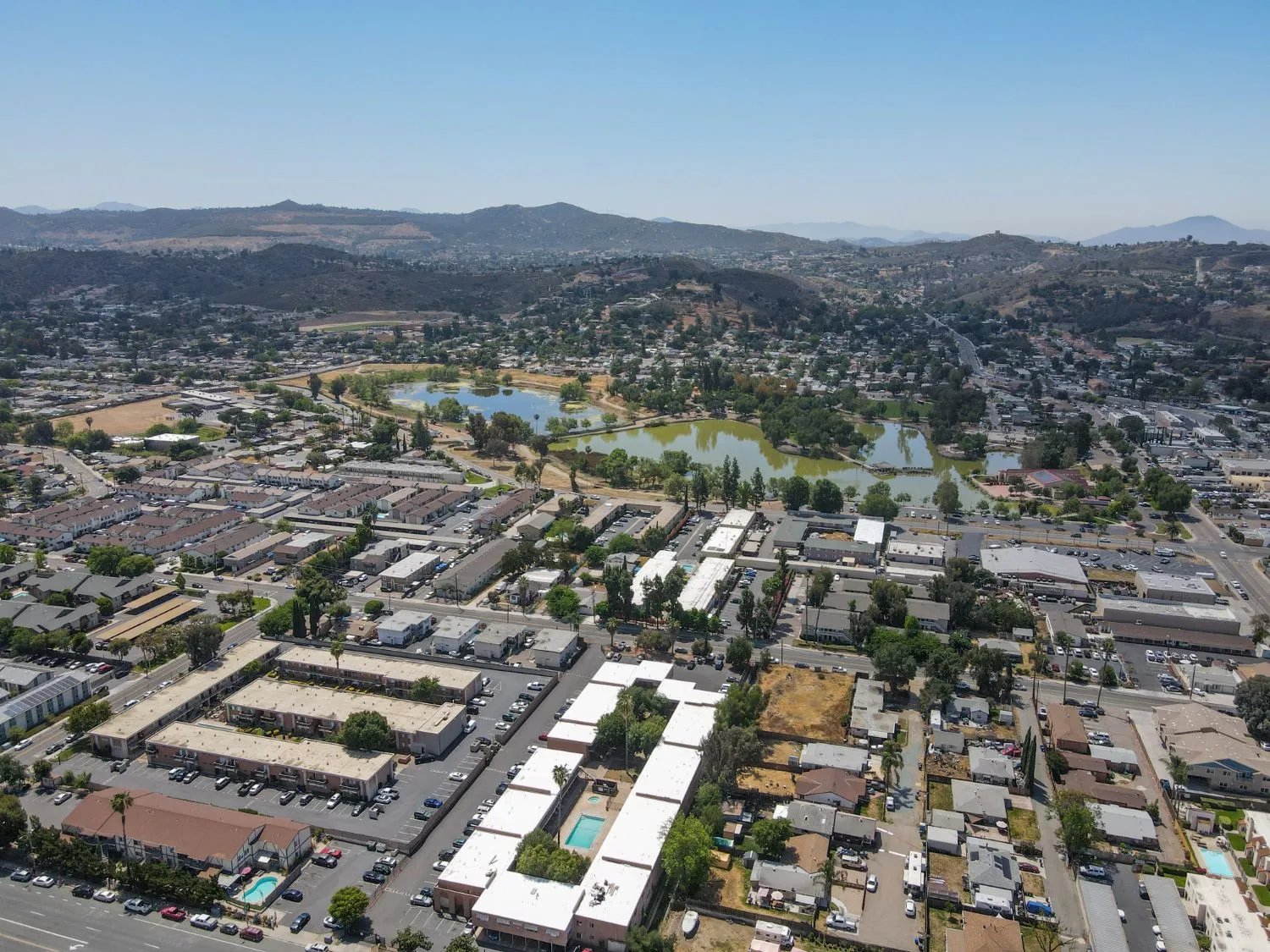
Aerial view over Lakeside, California, with Lindo Lake among neighbourhoods and the hills of East San Diego County behind.

Here's What Happy Lakeside Customers Have to Say

Lakeside Concrete Contractor FAQs

How much does it cost to hire a concrete contractor?

Costs depend on the project. Typical ranges in this market:

  • Driveway (broom finish): $10–$18 per sq. ft.
  • Patio (broom finish): $12–$16 per sq. ft.
  • Foundation: $12–$22 per sq. ft.
  • Stamped or decorative finish: add $5–$12 per sq. ft. to the base price
  • Resurfacing: $8–$15 per sq. ft. (add $6–$10 per sq. ft. for a decorative overlay)
  • Crack repair: $1–$3 per linear ft. (minor) or $200–$500 per linear ft. (structural)
  • Retaining wall: $250–$500 per linear ft. (block or segmental) or $350–$600 per linear ft. (poured concrete)
  • Concrete steps: $500–$1,500 each
  • Demolition and removal: $3–$6 per sq. ft.

The best way to get an exact number is a written estimate based on your specific property, since access, soil conditions and finish choice all move the price.

How much does concrete cost per yard in Lakeside and San Diego County?

Ready-mix concrete pricing varies by supplier and mix design, and most residential and commercial jobs are quoted by the project or by square footage rather than by the yard, since labor and finish work make up most of the real cost. A standard driveway typically runs $10 to $18 per square foot installed, with decorative and specialty finishes running higher per square foot but lower in total material volume than a full truckload quote would suggest.

What's the difference between concrete and cement?

Cement is one ingredient in concrete, not the same material. Concrete is a mix of cement, water, sand and gravel or crushed stone, and the cement acts as the binder that holds everything together as it cures. When people talk about pouring a driveway or patio, they're talking about concrete, even when they use the word cement.

Is concrete or asphalt better for a driveway?

Concrete costs more upfront but lasts significantly longer, typically 40 years or more with basic sealing, compared to 15 to 20 years for asphalt before it needs full resurfacing. Asphalt softens in extreme heat and needs resealing every two to three years to stay in good shape. Concrete also takes decorative finishes like stamping and color that asphalt can't match.

How thick should an RV pad be?

An RV pad should run five to six inches thick in most cases, thicker than a standard four-inch residential driveway, because of the real weight of a loaded RV or trailer. Reinforcement should scale up to match, typically a heavier rebar grid than standard flatwork uses. We size every RV pad to the actual vehicle it needs to support, not a one-size-fits-all spec.

How do you repair cracks in concrete?

We first check whether the base underneath the crack is still solid. If it is, we clean out the crack and fill it with the right material for its width and depth, usually running $1 to $3 per linear foot for minor cracks. If the base has failed, which shows up as sections shifted vertically relative to each other, filling the crack won't hold and we recommend removal and a new pour instead.

How do you maintain stamped or decorative concrete?

Reseal stamped, colored or acid-stained concrete every two to three years to protect the color from UV fading and keep oil and stains from soaking into the surface. Sweep and rinse regularly between resealing, and avoid de-icing products, which aren't usually a concern in Lakeside's climate but can still damage a sealed finish if used. Properly maintained stamped concrete holds its look for 25 years or more.

Do you handle concrete work for horse properties and ranches?

Yes. We pour barn floors, wash racks and equipment pads sized for livestock traffic and the drainage a working equestrian or ranch property actually needs. This is a real specialty for us given how many horse properties and rural lots sit around Lakeside, not an occasional side job.

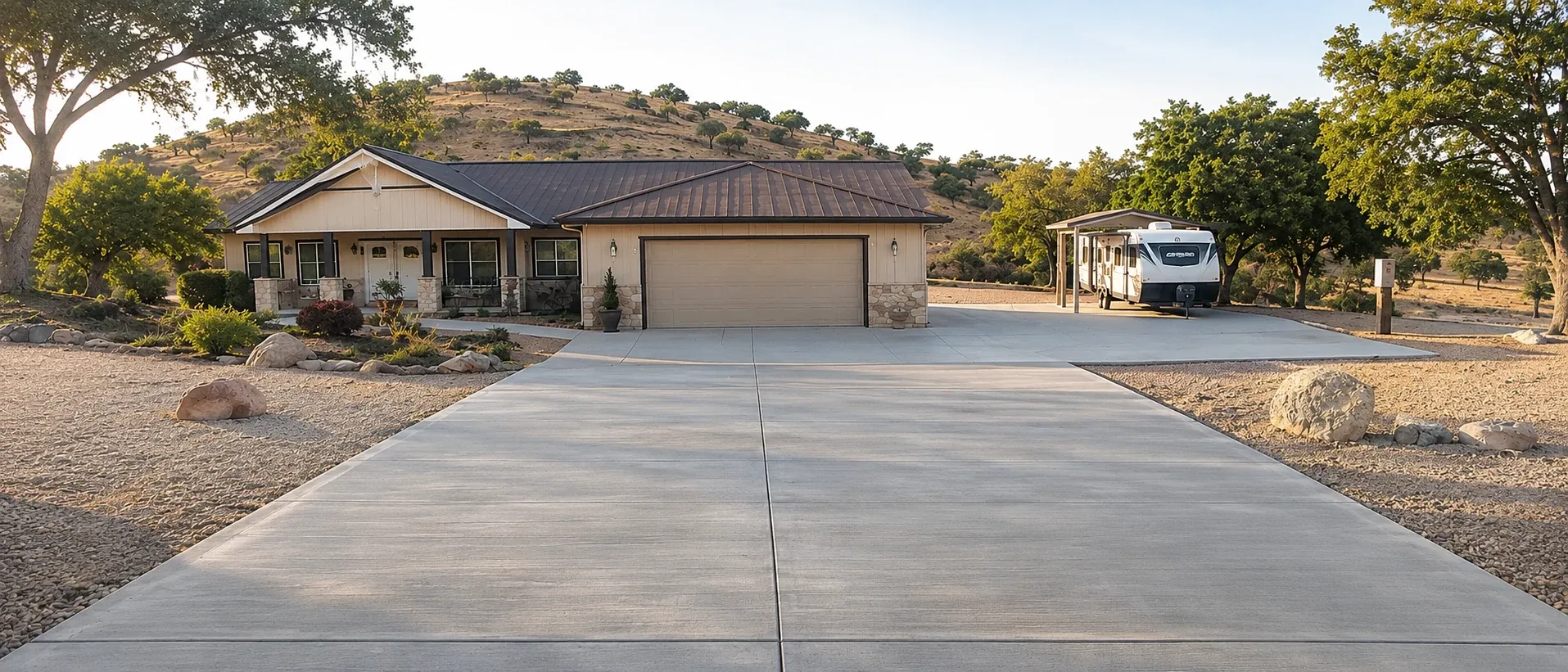
A wide new broom-finished concrete driveway leading to a ranch-style home, with an RV parked on its own concrete pad under a carport and dry oak-covered hills behind.

Get Lakeside's Top-Rated Concrete Team

Ready to get started? Request your free written estimate and we'll walk your property within a day or two. No pressure, no hidden line items, just a clear plan for your driveway, patio, retaining wall or specialty concrete project.

Request Your Free Estimate
Call (619) 359-0506